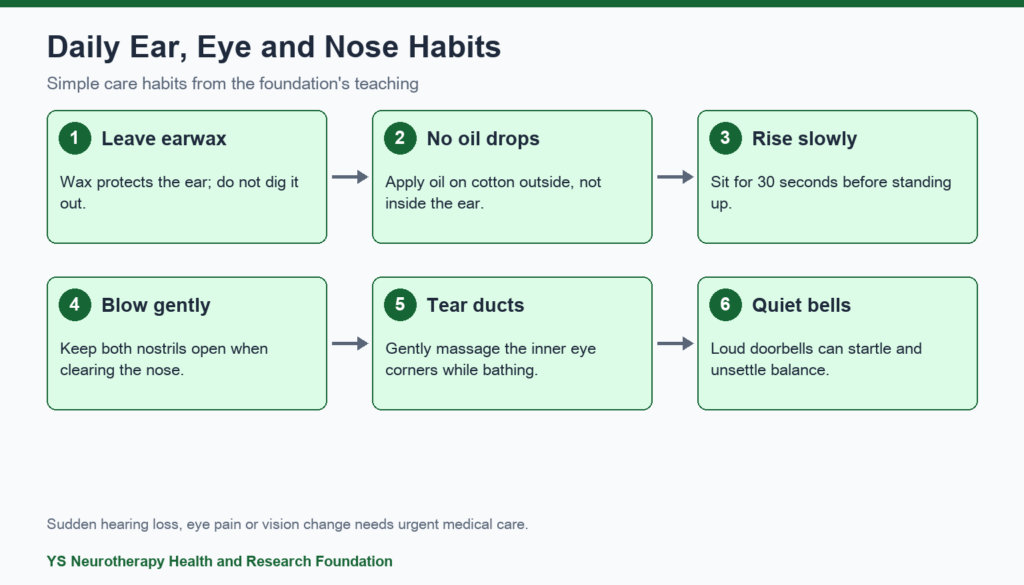
Quick answer: Neurotherapy’s ear, eye and nose care tips include leaving earwax alone, never pouring oil into the ear, sitting for 30 seconds before standing up, blowing the nose gently with both nostrils open, massaging the tear duct area while bathing, and lying on the left side for a few minutes when the nose runs in the morning.
Our ears, eyes and nose do a lot of quiet work every day. The teaching of YS Neurotherapy Health and Research Foundation includes simple habits to protect them.
These ear, eye and nose care tips take seconds and cost nothing. This guide explains each one and adds a note on when to see a doctor.
What Is Ear, Eye and Nose Care in Neurotherapy?
They are small daily practices for hearing, balance, eye moisture and nasal health, based on the foundation’s teaching and clinic experience. Most are about avoiding harm, such as damaging the eardrum, rather than adding new treatments.
Why They Matter
Hearing loss, dizziness and blocked sinuses can affect work, sleep and safety. Many everyday habits, such as digging out earwax or blowing hard through one nostril, can make these problems worse.
Ear Care
Leave Earwax Alone
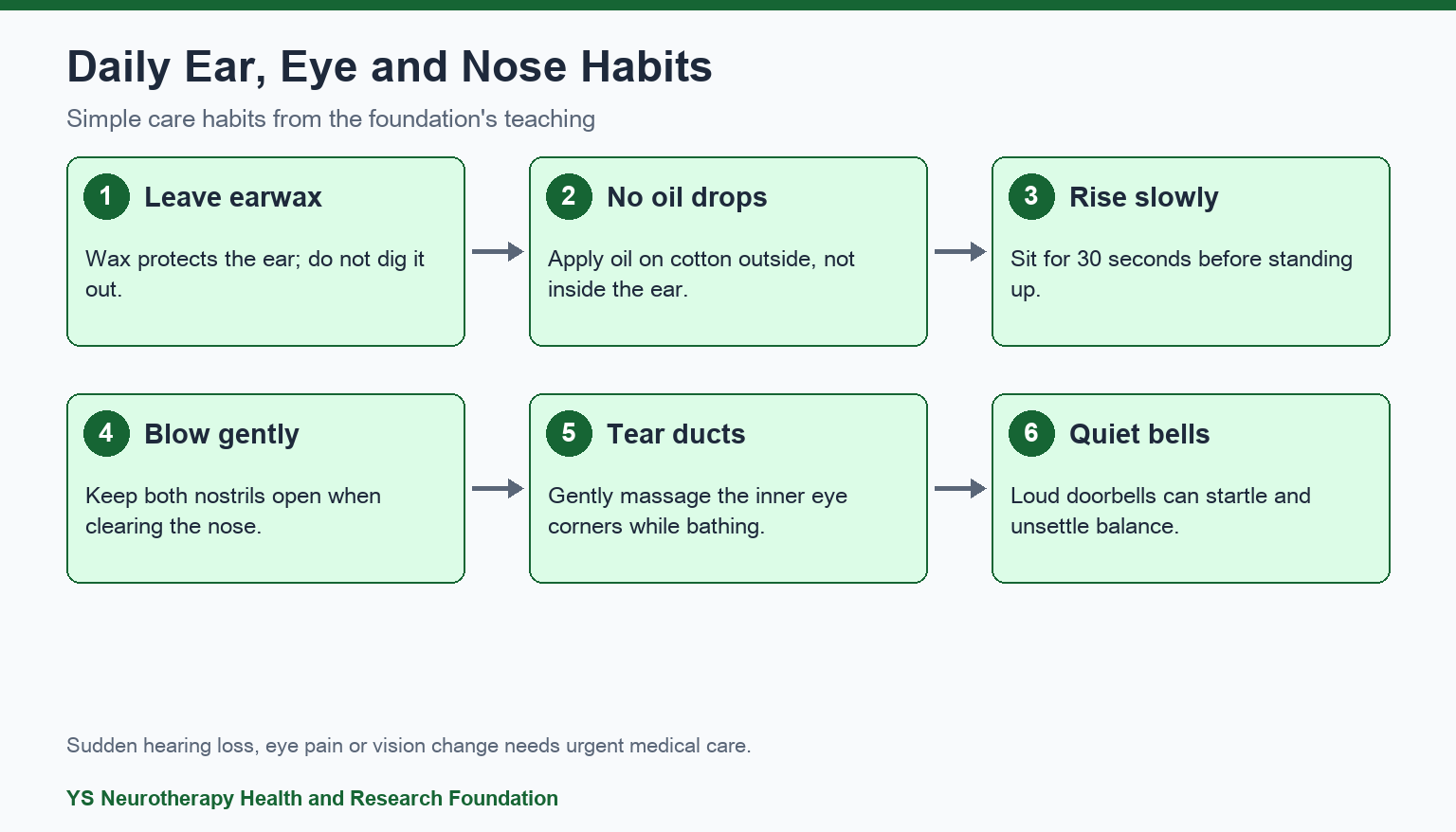
Earwax protects the ear canal. The teaching notes that the more you remove, the more the body makes. Clean only the outer ear.
Do Not Put Oil Drops Inside the Ear
Oil dropped into the ear can harm the eardrum or block the canal. If you want to use oil, apply a little on cotton around the outer ear only. The NHS explains safe earwax care and when to seek help.
Get Up Slowly to Protect Balance
Fluid in the inner ear helps keep balance. Jumping out of bed can disturb it and cause dizziness. Sit on the bed for about 30 seconds before standing.
Choose a Quiet Doorbell
Loud, sudden bells can startle sleepers and leave ringing in the ears. A soft buzzer is gentler.
Watch Caffeine, Nicotine and Unneeded Antibiotics
The teaching links heavy tea, coffee and smoking to weaker hearing nerves. Antibiotics should be taken only when prescribed, as unnecessary use also harms helpful gut bacteria.
Nose Care
Blow Gently, Both Sides Open
Blowing hard through one nostril while pressing the other can push mucus into the tube that links the nose and ear. This may affect hearing. Keep both nostrils open and blow gently.
Morning Runny Nose
For people whose nose runs every morning from cold or allergy, the teaching suggests lying on the left side for about ten minutes before getting up.
Eye Care
Near the inner corner of each eye is a small tear duct. The teaching suggests gently stroking this area about 30 times while bathing to support tear flow. Many people with watery eyes report comfort from this.
Eye pressure problems such as glaucoma need proper medical care. The NHS explains the signs of glaucoma.
Benefits
- They take less than a minute a day.
- They reduce everyday risks to the ears and eyes.
- They help prevent dizziness from sudden movements.
- They are safe for most ages.
Limitations and Warning Signs
- These habits do not treat infections or eye disease.
- Sudden hearing loss, ear pain with fever, or discharge needs a doctor.
- Eye pain, redness with blurred vision or sudden vision loss is an emergency.
- Severe or repeated dizziness should be checked by a doctor.
Common Habit vs Better Habit
| Common habit | Better habit | Why |
|---|---|---|
| Digging out earwax | Clean the outer ear only | Wax protects the ear |
| Oil drops in the ear | Oil on cotton outside | Protects the eardrum |
| Jumping out of bed | Sit for 30 seconds first | Protects balance |
| Forceful one-sided nose blowing | Gentle, both nostrils open | Protects the ear tube |
A Practitioner’s Perspective
Many patients with morning dizziness have simply been getting up too fast. Teaching them to roll to one side, sit for a moment and then stand is often one of the easiest wins in a treatment plan.
Actionable Checklist
- I clean only the outer ear.
- I do not put oil drops inside my ears.
- I sit for 30 seconds before standing up from bed.
- I blow my nose gently with both nostrils open.
- I see a doctor for sudden hearing or vision changes.
Key Takeaways
- Earwax protects the ear and should be left alone.
- Getting up slowly helps prevent dizziness.
- Gentle nose blowing protects hearing.
- Tear duct massage may ease dry or watery eyes.
- Sudden changes in hearing or vision need urgent medical care.
Frequently Asked Questions
Should I clean earwax with cotton buds?
No. Cotton buds push wax deeper. Clean only the outer ear and see a doctor if wax blocks your hearing.
Why do I feel dizzy when I get up?
Standing up suddenly can disturb the balance fluid in the inner ear and lower blood pressure briefly. Sit for 30 seconds before standing.
Is it safe to put mustard oil in the ears?
Pouring oil into the ear can harm the eardrum. Apply a little on cotton outside the ear instead.
How can I stop a runny nose every morning?
The teaching suggests lying on the left side for about ten minutes before getting up. Persistent symptoms may be an allergy and are worth checking with a doctor.
Conclusion
Protecting your ears, eyes and nose is mostly about avoiding small daily mistakes. These habits are easy to teach to the whole family.
Read more about neurotherapy treatment, learn about Dr Lajpatrai Mehra, whose teaching these tips come from, or explore our courses.
This article is for general information and does not replace medical advice.