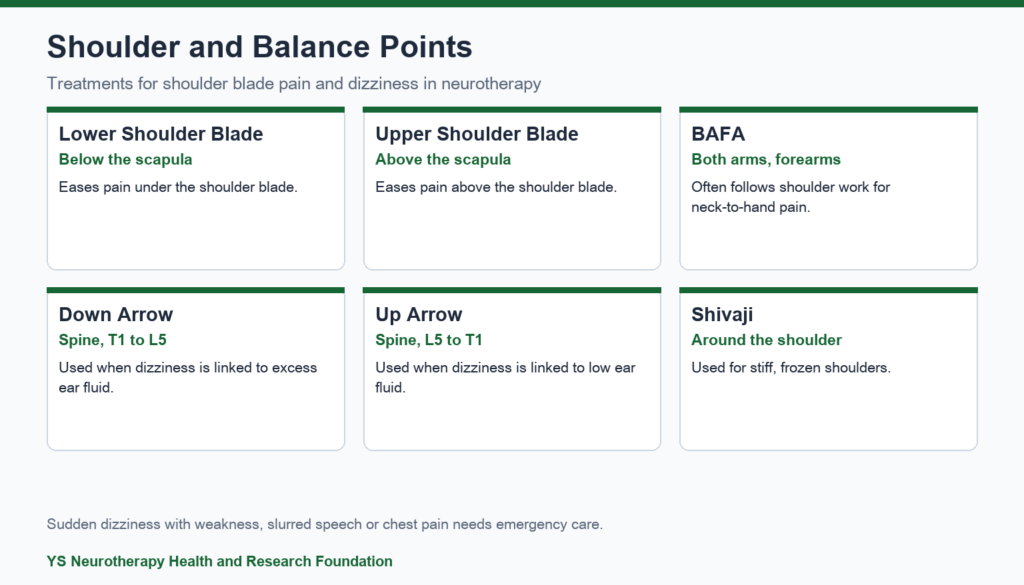
Quick answer: Shoulder blade pain neurotherapy uses the Lower and Upper Shoulder Blade treatments to release muscles below and above the scapula, often followed by BAFA for the arms. For dizziness, the Down Arrow and Up Arrow treatments along the spine are used depending on whether the teaching links it to excess or low fluid in the inner ear.
Pain around the shoulder blades is common in people who sit for long hours, carry loads or sleep awkwardly. Neurotherapy has specific treatments for it, and related spinal treatments used for dizziness.
This guide explains shoulder blade pain neurotherapy and the balance-related points taught by YS Neurotherapy Health and Research Foundation, plus the warning signs that need a doctor.
What Is Shoulder Blade Pain Neurotherapy?
Shoulder blade treatments are hand techniques given with the patient lying face-down, which stretch and release the muscles around the scapula from the spine out to the fingertips. The arrow treatments move along the spine and are used in the teaching for certain types of dizziness.
Why They Matter
The muscles around the shoulder blade connect the neck, back and arm. When they tighten, pain can spread to the neck and down the arm. Releasing them often eases neck-to-hand symptoms.
Shoulder Blade Treatments
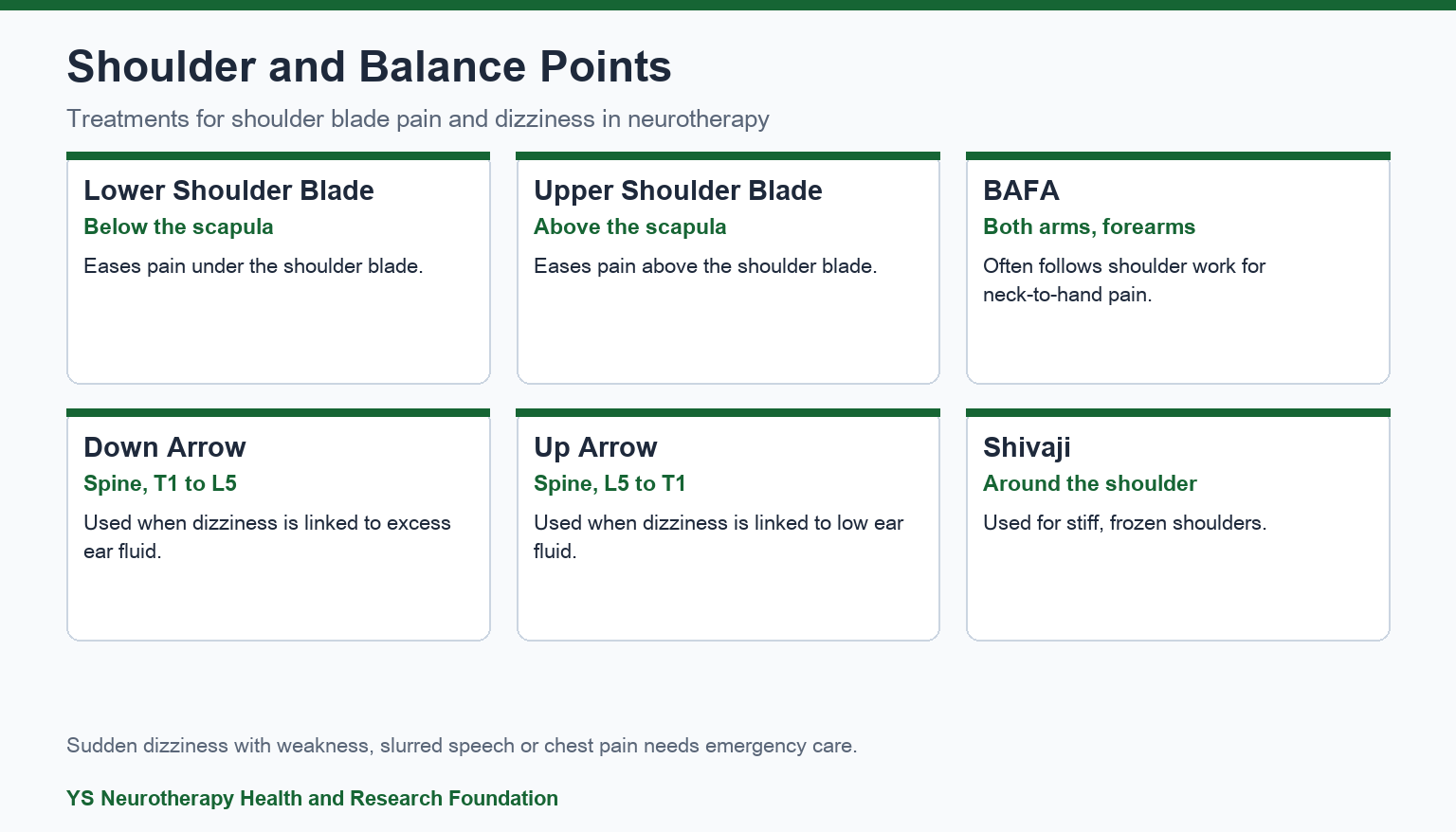
Lower Shoulder Blade
For pain below the scapula. With the patient face-down and elbows bent, the therapist anchors one palm at the spine and with the other draws the muscles outward along the arm to the fingertips. This is repeated three times on each side.
Upper Shoulder Blade
For pain above the scapula, following a similar pattern from a higher starting point.
BAFA (Both Arms, Both Forearms)
Often given after shoulder work, this treatment walks gentle pressure down both arms with the palms facing up, then facing down. It is used for pain, numbness and burning from the neck to the fingers.
Shivaji
Used for frozen or stiff shoulders, this loosens the muscles around the shoulder joint.
Balance Treatments
The teaching links some dizziness to changes in fluid in the inner ear.
- Down Arrow: with the patient seated or face-down, the therapist presses beside the spine from the top of the back (T1) down to the lower back (L5). It is used when dizziness is linked to excess ear fluid, as in Meniere’s disease.
- Up Arrow: the reverse direction, from L5 up to T1. It is used when dizziness is linked to low ear fluid.
The NHS explains common causes of vertigo, many of which need medical assessment.
Benefits
- Targets the muscles behind common desk-related pain.
- Can ease pain that spreads down the arm.
- Gentle options for dizziness alongside medical care.
Risks and Red Flags
- Left shoulder or arm pain with chest pain, sweating or breathlessness may be a heart attack; call emergency services.
- Sudden dizziness with weakness, facial drooping or slurred speech may be a stroke.
- Shoulder pain after a fall should be X-rayed.
- Never force a stiff shoulder through pain.
See the NHS guide to shoulder pain for more warning signs.
Treatment Quick Reference
| Treatment | Direction or area | Main use |
|---|---|---|
| Lower Shoulder Blade | Spine to fingertips, lower | Pain below the scapula |
| Upper Shoulder Blade | Spine to fingertips, upper | Pain above the scapula |
| BAFA | Shoulder to fingers | Neck-to-hand pain, numbness |
| Down Arrow | T1 down to L5 | Dizziness with excess ear fluid |
| Up Arrow | L5 up to T1 | Dizziness with low ear fluid |
Best Practices
- Rule out heart and stroke warning signs first.
- Ask about work posture and sleeping position.
- Follow shoulder work with BAFA for arm symptoms.
- Teach patients to get up slowly to reduce dizziness.
A Practitioner’s Perspective
Many office workers come in with shoulder blade pain and tingling fingers. Releasing the shoulder blade muscles and then giving BAFA often eases both, especially when patients also change how they sit and sleep.
Actionable Checklist
- I know the heart and stroke warning signs.
- I avoid sleeping with my arms above my head.
- I take breaks from long sitting.
- I get up slowly if I am prone to dizziness.
Key Takeaways
- Shoulder blade treatments release muscles from the spine to the fingers.
- BAFA helps with pain and numbness down the arm.
- Down and Up Arrow treatments are used for different types of dizziness.
- Chest pain or stroke signs need emergency care.
- Posture and sleep habits matter for lasting relief.
Frequently Asked Questions
What causes pain under the shoulder blade?
It is often muscular, from posture or strain. Left-sided pain with chest symptoms needs urgent medical care.
What is BAFA in neurotherapy?
BAFA stands for Both Arms, Both Forearms. It walks gentle pressure down both arms to ease pain and numbness from the neck to the fingers.
Can neurotherapy help vertigo?
Down and Up Arrow treatments are used for some types of dizziness. Vertigo should also be assessed by a doctor.
Is shoulder blade treatment painful?
It should feel like a firm stretch. Tell your therapist straight away if it hurts.
Conclusion
Shoulder blade pain and dizziness can both disrupt daily life. Neurotherapy offers targeted, gentle treatments for each, used safely alongside medical care.
Read about neurotherapy treatment, explore our courses, including cervical spondylosis training, or apply via the admission form.
This article is for learning purposes and does not replace medical advice.