Quick answer: Women’s health neurotherapy tips cover posture, periods, pregnancy, childbirth and newborn care. Key points include avoiding long periods with crossed legs, taking medicines in pregnancy only on a doctor’s advice, delaying cord cutting after birth, keeping the baby close to the mother, and breastfeeding on demand.
The teaching of YS Neurotherapy Health and Research Foundation includes a set of practical tips for women’s health and newborn care. Many come from decades of clinic experience and traditional Indian practice.
This guide explains these women’s health neurotherapy tips and, where it helps, shows what current medical guidance says. Several traditional points, such as delayed cord cutting, are now backed by international health bodies.
What Are Neurotherapy Women’s Health Tips?
Neurotherapy women’s health tips are daily habits and care practices for posture, menstruation, pregnancy, childbirth and the first days of a baby’s life. They aim to protect blood flow to the pelvic organs and support a calm, healthy start for mother and child.
Why These Tips Matter
The pelvic organs, including the uterus and ovaries, depend on steady blood supply. Neurotherapy teaching links one-sided muscle strain and poor circulation in this area to irregular periods, white discharge and other problems.
Around birth, small decisions, such as when the cord is cut, can have lasting effects on the baby’s health.
Everyday and Menstrual Health
Avoid Sitting or Sleeping with Crossed Legs
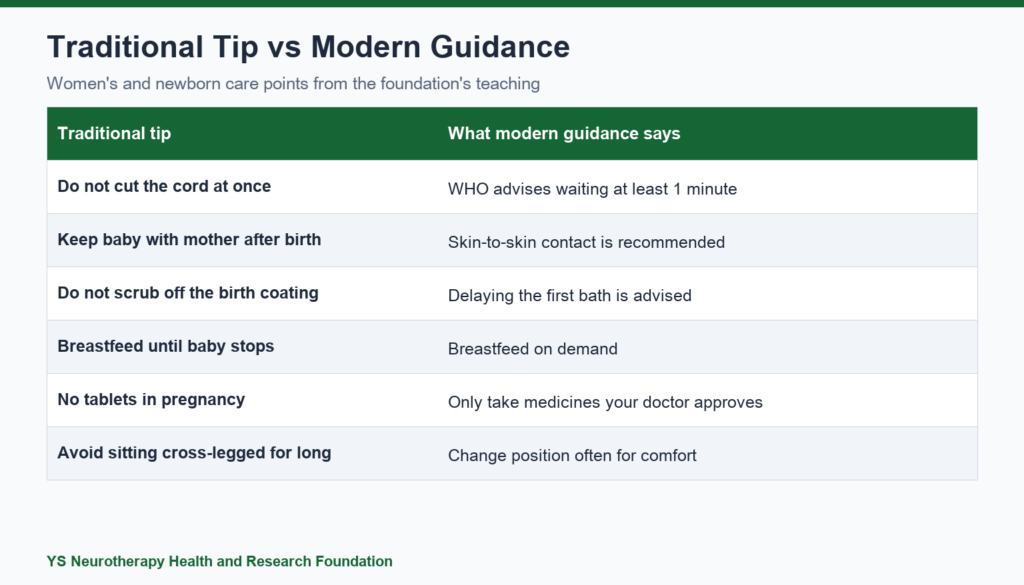
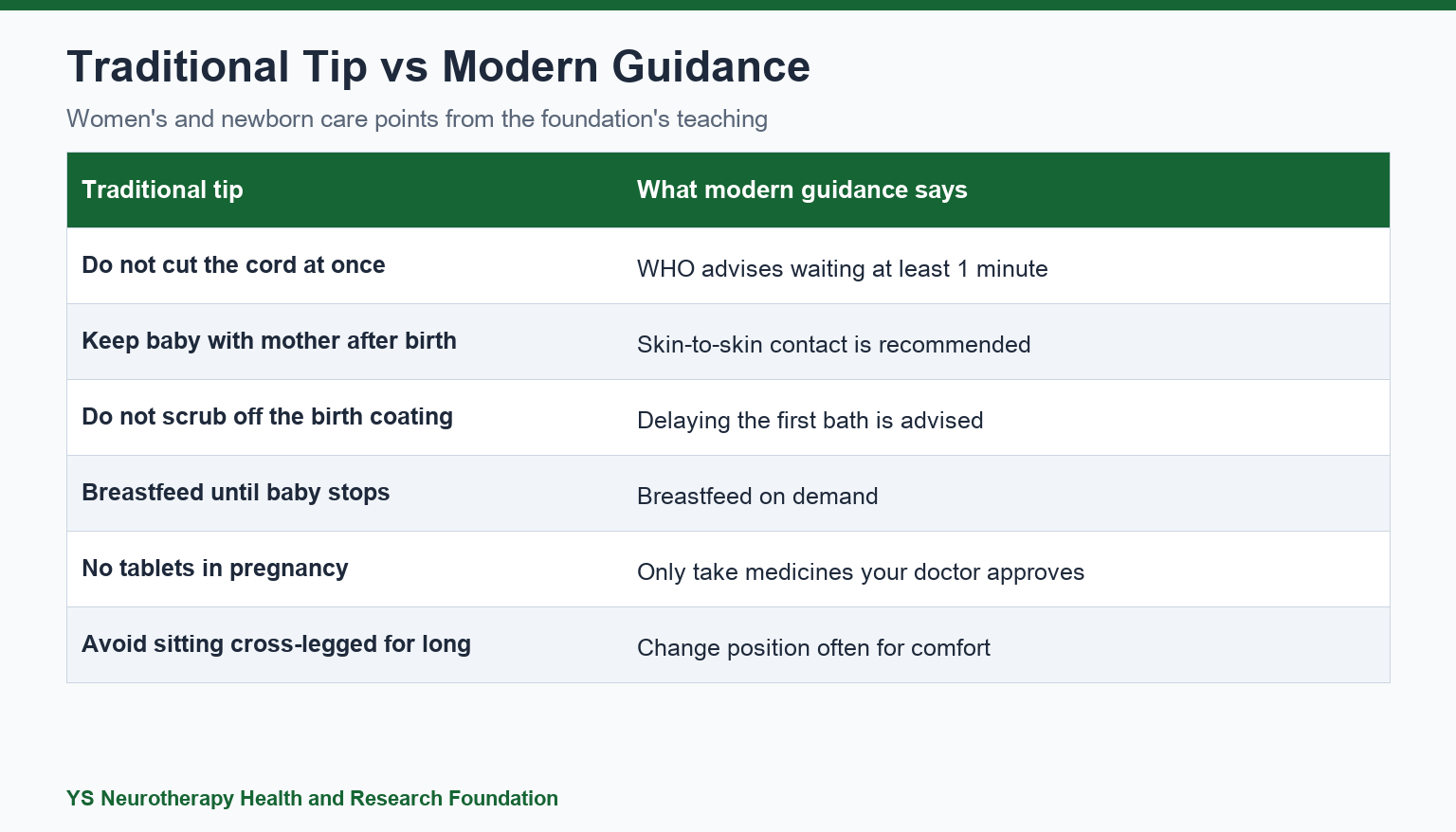
Sitting with one leg over the other for long periods pulls muscles below the navel to one side. The teaching links this to changes in pelvic circulation. Switch sides often and sleep with legs straight.
Support Calcium During Heavy Periods
For heavy bleeding, the teaching suggests warm (not hot) milk. A traditional option is soaking a dry date in milk overnight, then warming and taking both in the morning. Heavy or prolonged bleeding should always be checked by a doctor.
Leave a Gap Between Dinner and Bed
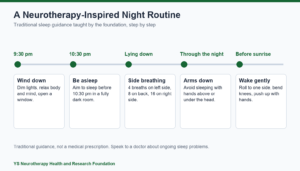
Finish the evening meal at least two hours before sleep so digestion is well under way.
Pregnancy and Childbirth
Medicines Only on a Doctor’s Advice
The teaching warns strongly against self-medicating in pregnancy, as painkillers, antibiotics and steroids can affect the mother’s liver and kidneys and the growing baby. Modern guidance agrees that you should not take any medicine in pregnancy without checking with a doctor or pharmacist. It does not mean stopping prescribed treatment on your own.
A Calm Mind During Labour
Fear makes the body tense. The teaching notes that when the uterine muscles are held tight through fear, pain feels worse. Reassurance and a calm setting help.
Do Not Rush to Cut the Cord
The teaching’s strongest message is not to cut the umbilical cord straight after birth. While the cord still pulses, it carries blood and oxygen to the baby. The World Health Organization recommends delaying cord clamping for at least one minute in most births. See the WHO guideline on delayed cord clamping.
Newborn Care
- Keep the protective coating. The white coating on a newborn’s skin protects it. Gently wipe rather than scrub it off; current practice also advises delaying the first full bath.
- Hold the baby close. Placing the baby with the mother straight after birth helps warmth and bonding.
- Lift with both hands. Support the baby’s whole body, never by one arm.
- Breastfeed on demand. Breast milk is the best food; let the baby feed until it stops.
- Mothers should sip water often. Many small drinks through the day are better than large amounts at once.
The WHO summarises the benefits of breastfeeding for mother and child.
Where Traditional Tips Need Care
Not every traditional idea fits modern safety standards.
- Delivery rooms should be kept at a safe, comfortable temperature decided by the medical team.
- Caesarean births are sometimes life-saving and should never be refused on principle.
- Fever, heavy bleeding after birth or a baby who feeds poorly needs urgent medical care.
Best Practices
- Book regular antenatal check-ups and follow your care plan.
- Discuss delayed cord clamping and skin-to-skin contact with your hospital before the due date.
- Tell your neurotherapist if you are pregnant; some treatments are changed or avoided.
- Seek medical help for heavy, painful or irregular periods.
A Practitioner’s Perspective
Treatment is usually not given during menstruation unless bleeding is very heavy or very light, when specific points may help. Pregnant women need a careful history and gentle, adapted care, always alongside their doctor.
Actionable Checklist
- I avoid sitting with crossed legs for long periods.
- I do not take any medicine in pregnancy without my doctor’s advice.
- I have discussed delayed cord clamping with my hospital.
- I plan to keep my baby close and breastfeed on demand.
- I know which warning signs need urgent care.
Key Takeaways
- Neurotherapy links posture and circulation to pelvic health.
- Medicines in pregnancy should only be taken on a doctor’s advice.
- Delaying cord clamping is supported by the WHO.
- Skin-to-skin contact and breastfeeding on demand support the newborn.
- Traditional tips should sit alongside proper medical care.
Frequently Asked Questions
Is neurotherapy safe during pregnancy?
Some treatments are adapted or avoided in pregnancy. Always tell your therapist you are pregnant and keep your doctor informed.
Why should the umbilical cord not be cut straight away?
While the cord pulses it still carries blood to the baby. The WHO recommends waiting at least one minute before clamping in most births.
Can neurotherapy help with irregular periods?
Neurotherapy includes points linked to the uterus and ovaries. Irregular or heavy periods should also be checked by a doctor to rule out other causes.
Should I stop my medicines if I become pregnant?
No. Do not stop or start any medicine without speaking to your doctor first.
How long should I breastfeed at each feed?
Let the baby feed until it stops on its own. Feeding on demand helps milk supply.
Conclusion
Many of these tips support a healthy routine for women and a gentle start for babies. The best results come from combining them with regular medical care.
Learn more about neurotherapy treatment, read about the foundation’s mission, or explore our courses.
This article is for general information and does not replace medical advice.