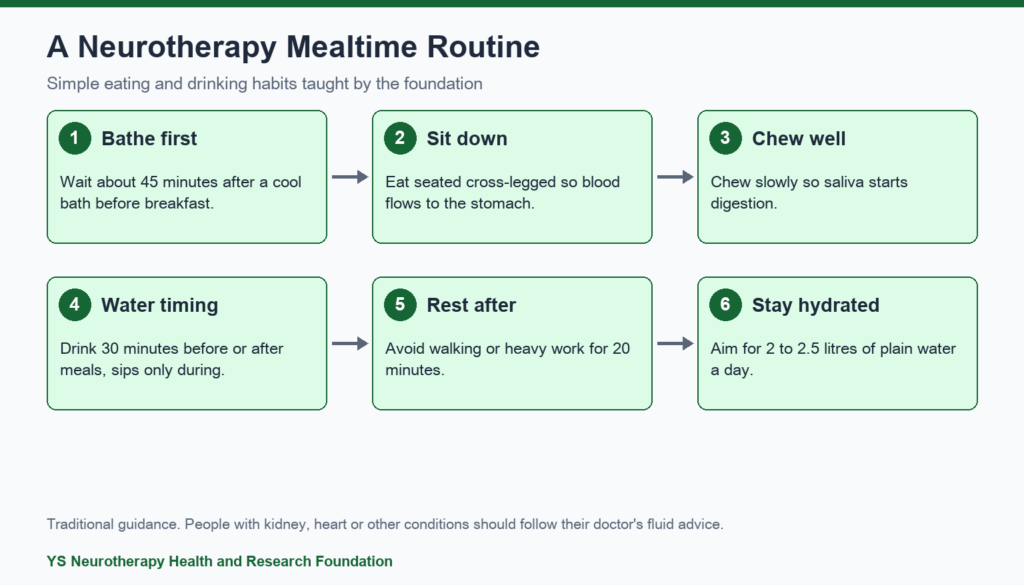
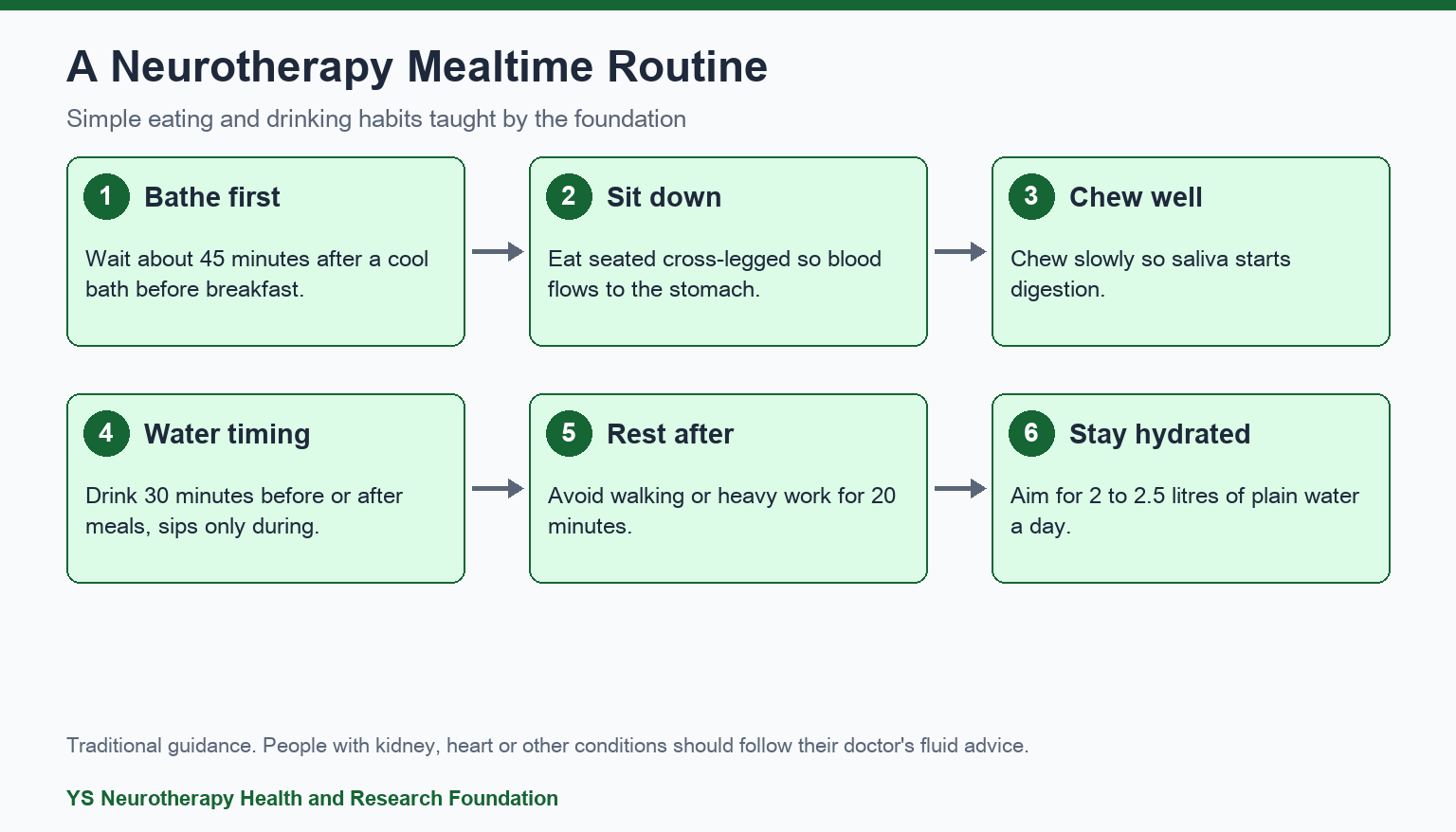
Quick answer: Neurotherapy eating rules focus on timing and posture. Eat breakfast about 45 minutes after a cool bath, sit on the floor while eating, chew well, drink water 30 minutes before or after meals rather than during them, rest for 20 minutes after eating, and drink 2 to 2.5 litres of plain water a day.
In neurotherapy, digestion is treated as the root of good health. So it is no surprise that the teaching of YS Neurotherapy Health and Research Foundation includes clear, practical rules about how and when to eat and drink.
These neurotherapy eating rules cost nothing and fit easily into an Indian daily routine. This guide explains each rule, the reason given for it, and where it lines up with general nutrition advice.
What Are Neurotherapy Eating Rules?
Neurotherapy eating rules are daily habits about meal timing, sitting posture, chewing, water intake and food choices that aim to send more blood to the digestive organs when they need it. Good blood supply is believed to help the stomach, liver and pancreas digest food fully.
Why Mealtime Habits Matter
The body cannot send extra blood everywhere at once. After a meal, the digestive organs need more blood. If the body is busy warming up after a bath, walking fast or standing, less blood reaches the stomach and digestion slows.
Poor digestion, in the neurotherapy view, leads to gas, acidity and constipation first, and to wider imbalance later. Good habits at the table are therefore one of the simplest ways to support treatment.
The Core Eating and Drinking Rules
1. Bathe First, Then Wait Before Breakfast
After a cool bath, blood moves towards the skin to warm the body. It takes about 30 to 45 minutes to settle. Eating in that window can leave food under-digested and cause gas. If you must eat first, leave a long gap before bathing.
2. Sit on the Floor to Eat
Sitting cross-legged keeps the legs folded, so more blood stays around the abdomen. When you sit on a chair, the legs hang down and gravity draws more blood to them.
3. Chew Slowly and Well
Saliva begins the digestion of rice, chapati and other starchy foods. Chewing well gives saliva time to work and is also linked to better fat digestion and a steadier weight.
4. Get the Timing of Water Right
Drink water 30 minutes before or after a meal, not during it. The stomach makes strong acid to digest protein and kill germs; large amounts of water with food are believed to weaken it. Keep a glass nearby for a sip if food sticks or your mouth is dry.
5. Rest for 20 Minutes After Eating
Avoid walking fast or heavy work straight after a meal. Sitting in Vajrasana is a good option. This is especially important for people with heart problems or breathlessness on walking.
6. Drink Enough Plain Water
Most adults are advised to drink about 10 to 12 glasses, or 2 to 2.5 litres, a day. Tea and soft drinks do not replace plain water. Earthen pot water is preferred to very cold fridge water.
7. Choose Seasonal, Local Food
Eat fruits and vegetables that grow in your region and season. People with joint pain are advised to limit sour foods such as curd, tamarind, tomato and lemon, and to notice how their own body responds.
Benefits of These Habits
- They are free and easy to start.
- They support steady digestion and fewer episodes of gas or acidity.
- They build mindful eating habits in children from an early age.
- They complement neurotherapy treatment for digestive problems.
Limitations and Cautions
- These are traditional guidelines, not a medical diet plan.
- People with kidney disease, heart failure or diabetes should follow their doctor’s advice on fluids and food.
- Sitting on the floor may not suit people with knee or hip problems; a low stool is a fair alternative.
- Ongoing weight loss, difficulty swallowing or blood in stool needs a doctor.
For general guidance on fluids, see the NHS page on water, drinks and your health.
Traditional Rule vs General Nutrition Advice
| Neurotherapy rule | Reason given | General advice |
|---|---|---|
| Chew slowly | Saliva starts digestion | Eating slowly supports fullness cues |
| 2 to 2.5 litres of water | Replaces fluid lost daily | Drink regularly through the day |
| Seasonal, local food | Suits the body’s needs | Eat a varied, fresh diet |
| Rest after meals | Blood goes to the stomach | Avoid hard exercise straight after eating |
Best Practices for Families
- Serve breakfast early enough that children are not rushing to school.
- Keep a glass of water on the table, but sip rather than gulp during meals.
- Eat dinner at least two hours before bed.
- Keep a simple food diary if you have joint pain, to spot foods that affect you.
A Therapist’s Perspective
Patients with gas or acidity often improve faster when they change just two habits: waiting after a bath before breakfast, and not drinking large amounts of water with meals. Treatment and daily habits work best together.
Actionable Checklist
- I wait at least 30 minutes after bathing before breakfast.
- I sit down to eat and chew each mouthful well.
- I drink water before or after meals, not with them.
- I drink 2 to 2.5 litres of plain water a day, unless my doctor says otherwise.
- I rest for about 20 minutes after eating.
Key Takeaways
- Neurotherapy eating rules aim to send more blood to the digestive organs at mealtimes.
- Wait after bathing before you eat, and sit down to eat.
- Chew well and time your water intake around meals.
- Drink enough plain water each day and choose seasonal food.
- Follow medical advice if you have a long-term condition.
Frequently Asked Questions
Why should I not drink water while eating?
Neurotherapy teaching holds that large amounts of water during meals dilute stomach acid and saliva, which can slow digestion. Small sips are fine if food sticks.
How much water should I drink in a day?
The foundation suggests about 2 to 2.5 litres of plain water for a healthy adult. People with kidney or heart conditions should follow their doctor’s advice.
Why wait after a bath before breakfast?
After a cool bath, blood moves to the skin to warm the body. Waiting 30 to 45 minutes lets blood return to the digestive organs.
Is sitting on the floor necessary?
It is preferred because folded legs keep more blood near the abdomen. If floor sitting is painful, use a low seat.
Should people with joint pain avoid sour foods?
The teaching suggests limiting sour foods such as curd, tamarind and lemon for joint pain. Watch how your body responds and discuss diet changes with your doctor.
Conclusion
Small changes at mealtimes can make a real difference to digestion. Start with one rule, such as timing your water, and build from there.
To understand why digestion matters so much, read what neurotherapy is and how it works, learn about pancreas function, or explore our neurotherapy courses.
This article is for general information and does not replace medical advice.