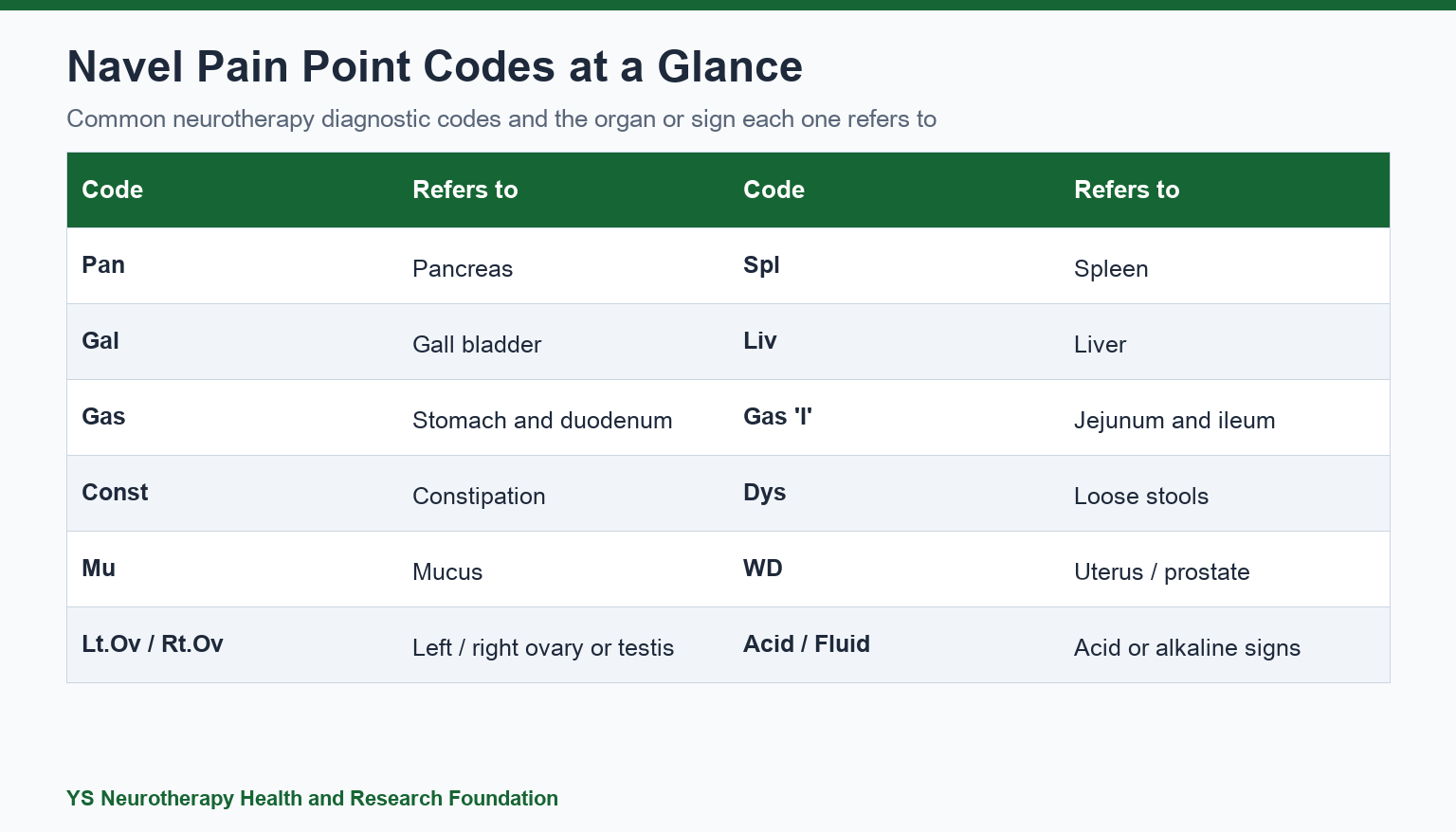
Quick answer: Neurotherapy diagnosis checks for pain or hardness at set points around the navel. Each point has a code name, such as Pan for pancreas, Gal for gall bladder and Liv for liver. Pain at a point suggests poor blood supply to the linked organ, and the pain is graded from minus to four plus to guide treatment.
Every neurotherapy session begins with the navel. Before any pressure is given, the therapist checks a set of points around it to understand which organs may be under strain.
This guide explains how neurotherapy diagnosis works, as taught by YS Neurotherapy Health and Research Foundation: the navel pain point chart, what the code names mean, how pain is graded and how the results guide treatment.
What Is Neurotherapy Diagnosis?
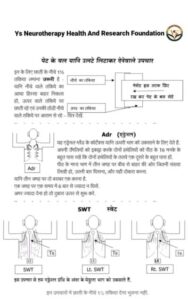
Neurotherapy diagnosis is a method of gently pressing set points around the navel and on the back to find pain, tenderness or hardness. Each point is linked to an organ or a group of symptoms. Pain at a point is read as a sign of poor blood flow to that organ.
The method differs from the medical examination known as palpation. It uses a fixed chart of points and code names built from many years of clinic experience.
Why the Navel Is the Starting Point
Neurotherapy views the navel as the centre of the body. Many digestive organs sit around it. When blood flow to one of them is restricted, a specific point nearby often feels tender or tight.
The underlying principle is simple: when any part of the body lacks blood supply, it hurts. When supply returns, the pain eases.
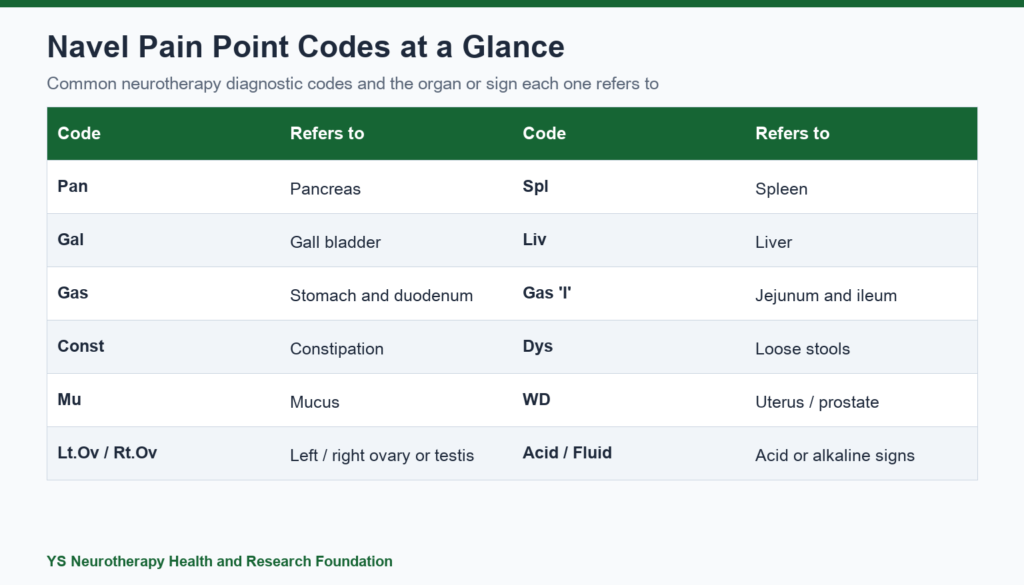
The Navel Pain Point Chart
Why Code Names Are Used
Code names keep treatment cards short and easy to read. They also spare patients worry. For example, the two kidney points on the back are called Mu⁰ (left) and Liv⁰ (right) rather than “kidney”, because the word alone can frighten patients.
How the Names Are Chosen
- Organ names: Pan (pancreas), Gal (gall bladder), Spl (spleen), Liv (liver), Lt.Ov and Rt.Ov (left and right ovary or testis).
- Symptom names: Const (constipation), Dys (loose stools), Mu (mucus), WD (white discharge).
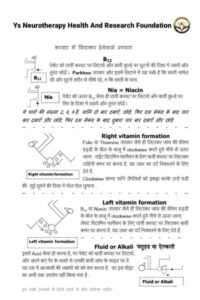
- Vitamin names: B12, Folic, Nia (niacin) and Thia (thiamine), linked to signs of deficiency.
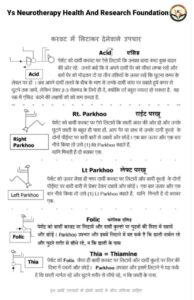
- Balance names: Acid and Fluid, linked to acid or alkaline tendencies.
Numbered Positions
Each direction around the navel carries numbers such as 1, 2 and 3. These link a pain spot to the treatment position that relieves it. As a general rule, pain close to the navel is relieved by treatment at position 3.
How Pain Is Graded
| Grade | What the therapist finds |
|---|---|
| ++++ | Patient reacts to a very light touch |
| +++ | Pain or hardness felt just below the surface |
| ++ | Soft on top, hard a little deeper |
| + | Soft deep down, with only slight hardness |
| – | Soft and painless; blood flow seen as normal |
From Diagnosis to Treatment
- Check all the pain points and record the grades on the card.
- Work out which organs are involved and the likely root cause.
- Give treatments to improve blood flow to those organs.
- Re-check the points after treatment and record the change.
Benefits
- Quick, low-cost and needs no equipment.
- Gives a clear starting point for every session.
- Tracks progress visit by visit on the card.
- Can be used alongside blood tests and scans.
Limitations
- It is a traditional method, not a medical diagnosis.
- It cannot rule out serious disease; medical tests are still needed.
- Accuracy depends on training and gentle, consistent pressure.
- Severe or sudden abdominal pain needs a doctor straight away.
The NHS lists stomach pain warning signs that need urgent care.
Best Practices for Students
- Use soft fingertips and press slowly inward.
- Always check points before and after treatment.
- Write grades clearly so another therapist can read them.
- Ask about recent meals, blood pressure and sugar first.
A Trainer’s Perspective
Students often rush the diagnosis to get to the treatment. But the diagnosis is the treatment plan. A careful five-minute check tells you where to work, and the re-check tells you whether it worked.
Actionable Checklist
- I know the main navel point code names.
- I can grade pain from minus to four plus.
- I record grades before and after every session.
- I refer severe or unexplained pain to a doctor.
Key Takeaways
- Neurotherapy diagnosis starts with points around the navel.
- Each point has a code name linked to an organ or symptom.
- Pain is read as a sign of poor blood supply.
- Grades from minus to four plus track progress.
- It complements, but does not replace, medical tests.
Frequently Asked Questions
What does “Pan” mean in neurotherapy?
Pan is the code name for the pancreas point near the navel. Pain there is linked to the pancreas and to pain in the middle of the chest.
Why are the kidney points called Mu⁰ and Liv⁰?
They sit behind the Mu and Liv points. Code names also avoid worrying patients with the word “kidney”.
Is navel diagnosis painful?
Pressure is gentle. Tender points may feel sore briefly, which is what the therapist is looking for.
Can neurotherapy diagnosis replace blood tests?
No. It is a complementary method and works best alongside standard medical tests.
Conclusion
The navel pain point chart is the foundation of every neurotherapy session. It turns gentle pressure into a clear, repeatable map of where the body needs help.
Study further with our diagnosis points guide, read how neurotherapy works, or join a neurotherapy course.
This article is for learning purposes and does not replace medical diagnosis.