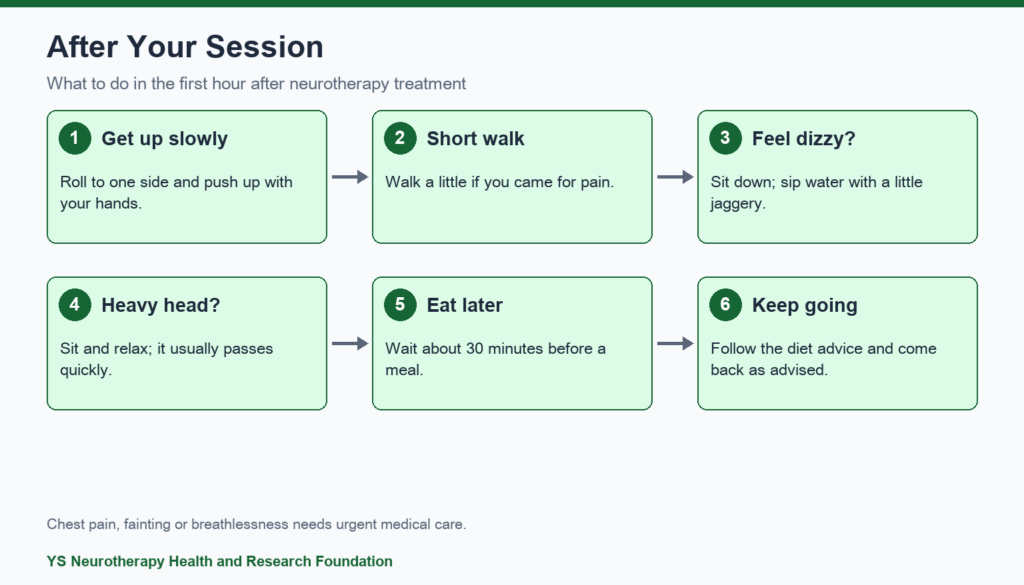
Quick answer: After a neurotherapy session, get up slowly by rolling to one side, walk a little if you came for pain, and wait about 30 minutes before eating. Brief light-headedness can happen; sit down and sip water with a little jaggery. Keep up regular sessions and diet advice for the best results.
What you do after a session matters almost as much as the treatment itself. The teaching of YS Neurotherapy Health and Research Foundation includes clear guidance for the hour after treatment, both for patients and for therapists.
This guide covers practical neurotherapy aftercare: how to get up, what normal after-effects feel like, and how progress is tracked from one visit to the next.
What Is Neurotherapy Aftercare?
Neurotherapy aftercare is the set of steps a patient and therapist follow once treatment ends, including re-checking pain points, getting up safely, handling brief after-effects and planning the next visit. Good aftercare helps the body settle and makes progress easier to measure.
Why Aftercare Matters
Treatment changes blood flow to organs and glands. For a short while, the body adjusts. Getting up too fast, eating straight away or rushing off can make that adjustment uncomfortable.
Aftercare also builds trust. When patients see which pain points have eased, they understand how the treatment is working.
Step-by-Step Aftercare
1. The Therapist Re-Checks Pain Points
Before you get up, the therapist presses the navel pain points again and records the change. For example, a point marked four plus (++++) before treatment might now be two plus (++) or minus (–). The therapist shows or tells you which points have improved.
2. Get Up Slowly
Roll to one side, bend your knees and push up with your hands. Sitting up straight from lying flat can strain the abdomen and disturb balance.
3. Walk a Little
If you came with pain, a short, gentle walk helps you notice the change and settle.
4. Handle Brief Light-Headedness Calmly
Some people feel dizzy for a few minutes. The foundation’s explanation is that improved digestive activity can briefly lower blood sugar. Sit on a chair and sip half a glass of water with a little jaggery until you feel steady. People with diabetes should tell their therapist before treatment.
5. A Heavy Head Usually Passes
Some people feel a heavy head as blood flow to the head increases. Sitting and letting the therapist gently relax the neck muscles usually eases it.
6. Wait Before Eating
Wait about 30 minutes before a meal.
7. Wait Before Phone Calls
Settle for a few minutes before using your phone or rushing off.
How Progress Is Tracked
Each visit is recorded on a treatment card. Comparing the before and after marks from the last visit shows whether that treatment helped. If a treatment keeps reducing pain at the points, it is usually continued. If not, it is changed.
This is why therapists should never repeat “yesterday’s treatment” from memory without checking the points and the card first.
Benefits of Good Aftercare
- Safer recovery from each session.
- Clear, visible measures of progress.
- Better decisions about the next treatment.
- More patient confidence and regular attendance.
Warning Signs
- Chest pain, fainting or breathlessness needs urgent medical help.
- Dizziness that does not settle after resting and a sweet drink should be checked.
- New or severe pain after treatment should be reported to the therapist and, if needed, a doctor.
The WHO notes that clear communication and careful records are central to patient safety in any care setting.
Normal Feeling vs When to Get Help
| After-effect | Usually normal? | What to do |
|---|---|---|
| Mild light-headedness | Yes, brief | Sit, sip water with jaggery |
| Heavy head | Yes, brief | Sit and relax the neck |
| Feeling lighter or less pain | Yes | Walk gently, note the change |
| Chest pain or fainting | No | Get urgent medical help |
Best Practices for Therapists
- Always re-check and record pain points after treatment.
- Help patients sit up; never rush them.
- Keep water and jaggery ready at the centre.
- Clean and straighten the mat and pillows before the next patient.
- Remind patients about diet advice and the next visit.
A Practitioner’s Perspective
Patients sometimes miss a few days, then feel their pain return and decide treatment did not work. The card tells the real story. Showing a patient their own before-and-after marks is often what keeps them on track.
Actionable Checklist
- I roll to one side and push up with my hands after treatment.
- I sit down if I feel light-headed.
- I wait about 30 minutes before eating.
- I follow the diet advice between sessions.
- I attend sessions regularly as advised.
Key Takeaways
- Pain points are re-checked and recorded after every session.
- Get up slowly and walk a little.
- Brief light-headedness can happen; sit and take a sweet drink.
- Wait about 30 minutes before eating.
- Regular sessions and good records guide progress.
Frequently Asked Questions
Why do I feel dizzy after neurotherapy?
The foundation’s explanation is that better digestive activity can briefly lower blood sugar. Sit down and sip water with a little jaggery; it usually passes quickly.
When can I eat after a session?
Wait about 30 minutes before a meal.
How do I know the treatment is working?
Your therapist grades pain points before and after each session. Fewer plus marks over time show improvement.
What if my pain comes back after a few days?
This is common if sessions are missed. Return for treatment; the therapist will check your card and adjust the plan.
Conclusion
Good aftercare is simple: rise slowly, rest a little, eat later and keep coming back. It turns single sessions into steady progress.
Learn more about neurotherapy treatment, read how neurotherapy works, or train as a therapist through our courses.
This article is for general information and does not replace medical advice.