Quick answer: To become a neurotherapist in India, start by seeing treatment at a free camp, take a short crash course, then complete a full neurotherapist diploma with exams and supervised practice. After that, you can work at camps and clinics or open your own centre, while making clear that neurotherapy complements, and does not replace, medical care.
Neurotherapy offers a way to help people without medicines and to build meaningful self-employment. Many practitioners start as patients or volunteers and go on to run their own centres.
This guide explains how to become a neurotherapist, from first interest to setting up a practice, based on the training path offered by YS Neurotherapy Health and Research Foundation.
What Is a Neurotherapist?
A neurotherapist is a trained practitioner who gives drug-free neurotherapy treatments, using timed pressure at set points to improve blood supply to organs and glands. They also guide patients on food, water, breathing and sleep habits that support recovery.
A neurotherapist does not prescribe medicines, perform surgery or replace a doctor. Good practitioners work alongside medical care and refer patients when needed.
Why Consider a Career in Neurotherapy?
- Service. The foundation’s goal is to set up at least 10,000 neurotherapy centres across India, many in rural areas.
- Self-employment. Training can lead to meaningful work in your own town or village.
- Low set-up cost. Treatment needs a bed, a support frame and a chair, not expensive machines.
- Open to all ages. The method can be learnt by people of any age and background.
- Family benefit. Many people learn first to care for their own family’s health.
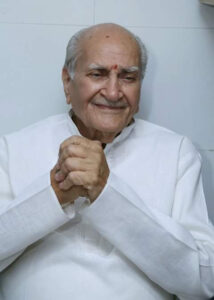
Dr Lajpatrai Mehra, whose method the foundation teaches, trained more than 3,000 practitioners and ran over 100 free camps. That tradition of training and free service continues today.
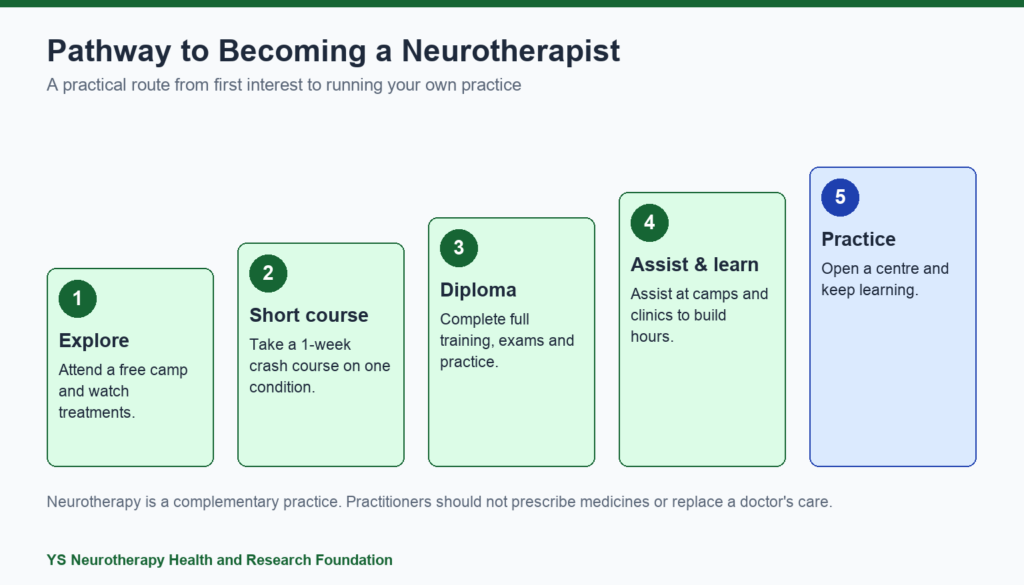
How to Become a Neurotherapist: Step by Step

Step 1: Explore
Attend a free neurotherapy camp. Watch treatments, talk to therapists and ask patients about their experience. This helps you decide whether the work suits you.
Step 2: Take a Short Course
The foundation offers one-week crash courses focused on single problems, such as gas and acidity, cervical spondylosis, back pain and knee pain. These give a practical taste of treatment in a short time.
Step 3: Complete the Diploma
The neurotherapist diploma covers the full system. Typical areas of study include:
- anatomy and physiology, especially digestion and glands
- diagnosis points, including navel assessment
- treatment formulas for common conditions
- lying-down and seated treatment techniques
- patient safety and when to refer to a doctor
Students sit exams, and certificates can be verified online.
Step 4: Assist and Learn
Build hands-on hours at camps and clinics under an experienced therapist. This is where timing, pressure and patient care become second nature.
Step 5: Start Practising
Once you are confident, you can offer treatment independently, join a clinic, or open your own centre. Many practitioners also volunteer at camps to keep learning.
Challenges to Plan For
- Recognition. Neurotherapy is not part of India’s formally regulated medical systems, so practitioners must not call themselves medical doctors or claim to cure diseases.
- Patient trust. New centres take time to build a reputation; free camps and honest communication help.
- Physical demands. Giving several treatments a day needs good fitness and correct posture.
- Ongoing learning. Skills need regular practice and refresher training.
Short Course vs Diploma
| Feature | Short crash course | Neurotherapist diploma |
|---|---|---|
| Duration | About one week | Longer, structured programme |
| Focus | One problem, such as back pain | The full neurotherapy system |
| Exams and certificate | Course-specific | Formal exams and verifiable certificate |
| Best for | Family care or trying the field | Professional practice or opening a centre |
See the courses page for current course options and fees.
Best Practices for New Practitioners
- Keep simple written records for every patient.
- Ask for recent medical reports and respect the doctor’s treatment plan.
- Explain clearly what neurotherapy can and cannot do.
- Refer urgent or unexplained symptoms to a doctor straight away.
- Keep learning through workshops, camps and senior therapists.
- Look after your own health, posture and fitness.
Starting Your Own Centre: A Founder’s Perspective
New centres often grow fastest through free camps rather than paid sessions. People trust what they have seen help their neighbours. Start small, be honest about results, and let your reputation grow one patient at a time.
If you plan to open a centre under the foundation’s name, see the franchise registration page for details.
Actionable Checklist
- I have attended a neurotherapy camp and observed treatments.
- I have chosen between a short course and the full diploma.
- I have applied through the admission form.
- I have a plan to gain supervised practice hours.
- I understand the limits of neurotherapy and when to refer to a doctor.
- I have a simple plan for where and how I will practise.
Key Takeaways
- The path runs from camp visit to short course, diploma, supervised practice and independent work.
- Short courses suit family care; the diploma suits professional practice.
- Set-up costs are low, which makes centres possible in small towns and villages.
- Practitioners must not claim to be doctors or promise cures.
- Honest communication and free service build lasting trust.
Frequently Asked Questions
Who can become a neurotherapist?
People of most ages and backgrounds can learn neurotherapy. Good health, patience and a genuine wish to help others matter more than a formal medical background.
Do I need a medical degree to learn neurotherapy?
No. However, a neurotherapy certificate is not a medical degree, so practitioners must not present themselves as doctors.
How long does it take to become a neurotherapist?
A crash course takes about a week. The full diploma and supervised practice take longer, depending on the programme and your pace.
Can I open my own neurotherapy centre?
Yes. Many trained practitioners run their own centres. The foundation also offers a franchise route for those who want to work under its name.
How can someone check my certificate?
Certificates issued by the foundation can be checked on the certificate verification page.
Is neurotherapy a good career for women?
Yes. Many women train as neurotherapists and treat family members, run home-based centres or work at camps.
Conclusion
Becoming a neurotherapist is a practical path to service and self-employment. Start by seeing the work at a camp, build your skills step by step, and always be clear about where neurotherapy fits alongside medical care.
Ready to begin? Explore our neurotherapy courses or fill in the admission form. For wider context on complementary health, see the NCCIH guide to complementary and integrative health.