Quick answer: Neurotherapy starts with digestion because glands and organs need raw materials from digested food to make hormones and enzymes. If digestion, absorption or elimination is weak, the body’s chemical balance slips and illness follows. Correcting digestion is therefore treated as the root of recovery.
Many people are surprised when a neurotherapist starts by checking the stomach, even when the complaint is a headache, joint pain or poor sleep. There is a clear reason for this.
In the approach taught by YS Neurotherapy Health and Research Foundation, neurotherapy and digestion are closely linked. The digestive system supplies the raw materials every gland needs. This guide explains that chain step by step, and what it means for patients and students.
What Is the Root-Cause Approach in Neurotherapy?
The root-cause approach in neurotherapy holds that most illness begins when the body’s internal chemistry loses balance, and that this imbalance usually starts with poor digestion or poor blood supply to an organ. Treatment aims to correct that starting point rather than only the painful area.
Signs of lost balance include changes in:
- blood pressure and blood sugar
- body temperature
- the acid-alkaline level of body fluids
- hormone, enzyme and antibody levels
Why Neurotherapy Starts with Digestion
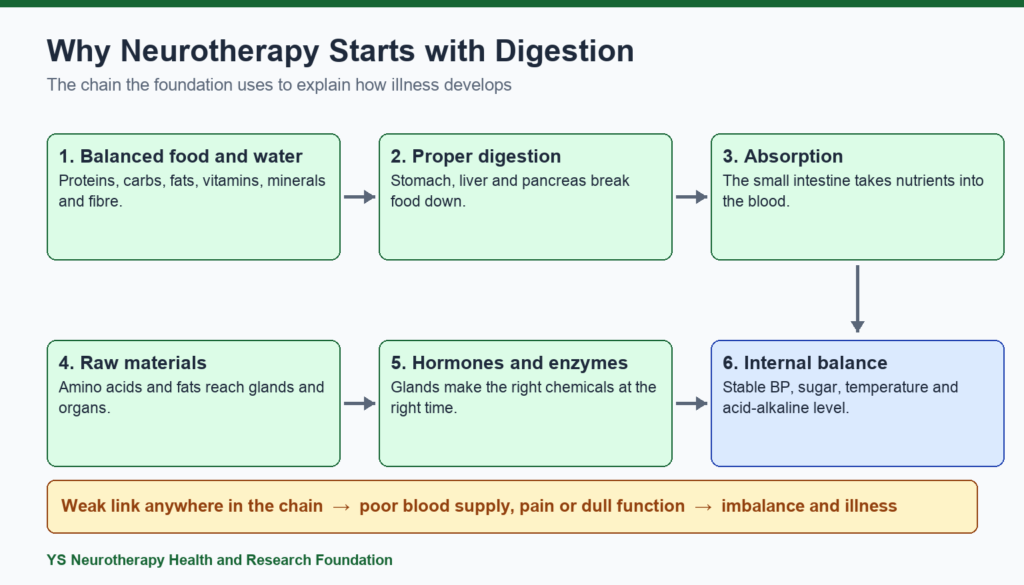
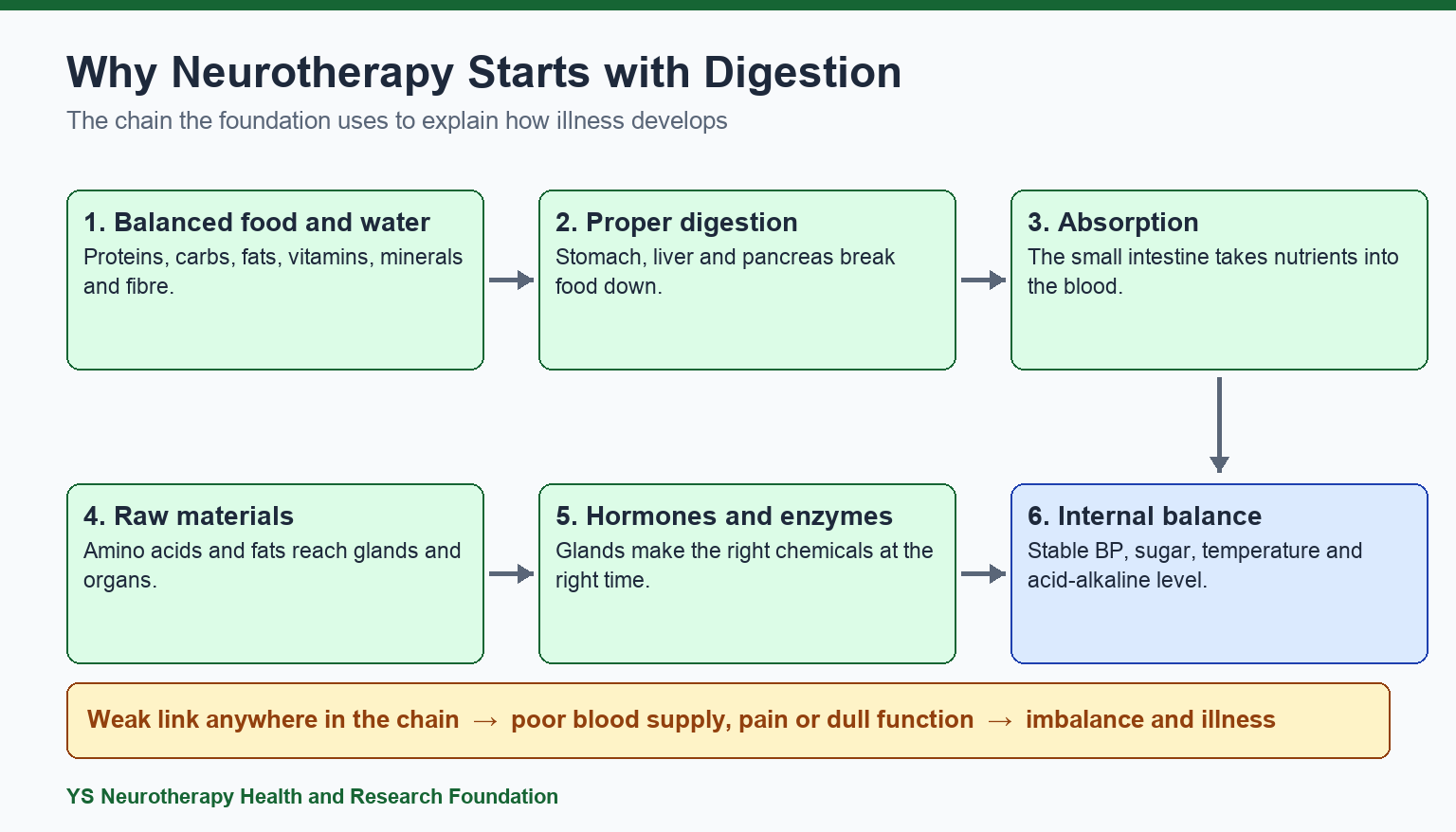
Your body works like a large chemical factory. The liver and pancreas make substances that other glands later use to build hormones and enzymes. They can only do this well if the right raw materials arrive at the right time.
The Six Links in the Chain
- Balanced food and water. Meals should include proteins, carbohydrates, fats, vitamins, minerals and fibre, with regular water intake.
- Proper digestion. The salivary glands, stomach, liver and pancreas must break food down fully.
- Absorption. The small intestine (duodenum, jejunum and ileum) must take nutrients into the blood.
- Raw materials. Amino acids and fats must reach the glands, because most hormones and all enzymes are built from them.
- Hormones and enzymes. Each gland must make its chemicals in the right amount at the right time.
- Elimination and breathing. The kidneys, skin, large intestine and lungs must clear waste every day.
For a plain-English overview of how these organs work, see the NIDDK guide to your digestive system and how it works.
A Simple Rule to Remember
Dr Lajpatrai Mehra, whose method the foundation teaches, summed this up in one line: if the stomach, lungs and kidneys work well, disease finds it hard to take hold. Students often use this as a starting checklist.
How Neurotherapy Finds the Weak Link
Neurotherapy uses pain as a signal. When blood supply to a part of the body is restricted, that part feels pain or numbness. Sit hunched for too long and your back aches; change position and the ache fades.
The same principle is applied to internal organs:
- Pain or hardness felt around the navel suggests a digestive organ is not getting enough blood.
- An organ with poor blood supply works below its normal level.
- When the pain at that point disappears after treatment, blood supply is taken to have improved.
Treatment then applies pressure in a set order to stimulate the relevant glands, so they return to normal work and make the chemicals the body needs.
Benefits of a Digestion-First Approach
- It looks for a cause instead of only easing the symptom.
- It encourages better daily habits around food, water and breathing.
- It can be combined with standard tests, such as blood reports, to track change.
- It is drug-free, which appeals to people who want to rely less on tablets under medical guidance.
Limitations and Cautions
The digestion-first model is a traditional framework, not a replacement for medical diagnosis.
- Not every illness starts in the gut; infections, injuries and genetic conditions need medical care.
- Formal research on neurotherapy outcomes is limited.
- Warning signs such as blood in stool, sudden weight loss, severe abdominal pain or persistent vomiting need a doctor straight away.
- Patients should not stop prescribed medicines without their doctor’s advice.
Symptom-Focused vs Root-Cause Care
| Aspect | Symptom-focused care | Neurotherapy root-cause approach |
|---|---|---|
| First question | Where does it hurt? | Which organ is under-supplied, and why? |
| Starting area | The painful part | Digestion, navel and related glands |
| Main tools | Medicines, local treatment | Timed pressure, diet, breathing, routine |
| Patient’s role | Mostly passive | Active: food, water and sleep habits matter |
Best Practices for Better Digestion
- Eat balanced meals at regular times, and chew well.
- Drink water steadily through the day rather than all at once.
- Do not ignore gas, acidity or constipation; they are early warning signs.
- Practise slow, deep breathing each day to support the lungs.
- Sleep on time, as rest supports gland function.
A Therapist’s Perspective
Even when a patient comes in for knee pain, a neurotherapist usually starts at the navel. Long-standing constipation or acidity is often addressed alongside the knee itself. The lesson for patients is that the painful part is often where the problem shows, not necessarily where it starts.
Actionable Checklist
- I eat a balanced diet with protein, fibre and vegetables every day.
- I drink enough water and pass urine regularly.
- My bowels move at least once a day.
- I do not ignore regular gas, acidity or bloating.
- I have discussed any ongoing digestive symptoms with a doctor.
Key Takeaways
- Neurotherapy treats digestion first because glands depend on digested food for raw materials.
- Illness is seen as a loss of internal chemical balance.
- Pain is used as a sign of poor blood supply to an organ.
- Good food, water, breathing and elimination habits support the treatment.
- Serious or sudden symptoms always need a doctor.
Frequently Asked Questions
Why does a neurotherapist check my navel?
Tenderness or hardness around the navel is used to judge which digestive organs may be under strain. It guides which treatments are given.
Can poor digestion cause problems elsewhere in the body?
In the neurotherapy view, yes. Poor digestion reduces the raw materials glands need, which can affect hormones, energy and pain levels.
What are early signs of weak digestion?
Common signs include gas, acidity, bloating, constipation and heaviness after meals. Ongoing symptoms should be checked by a doctor.
Does neurotherapy replace a gastroenterologist?
No. Neurotherapy is a complementary method. Serious or unexplained digestive symptoms need medical investigation.
How many sessions are usually needed?
It varies with the person and the problem. Many therapists review progress after one to two weeks of regular sessions.
Conclusion
Neurotherapy starts with digestion because, in its view, every gland depends on what the gut provides. Fix the supply line and the rest of the body has a better chance to rebalance.
To go deeper, read about how the pancreas functions, learn about neurotherapy treatment, or explore our neurotherapy courses, including short courses on gas and acidity.
This article is for general information and does not replace medical advice.