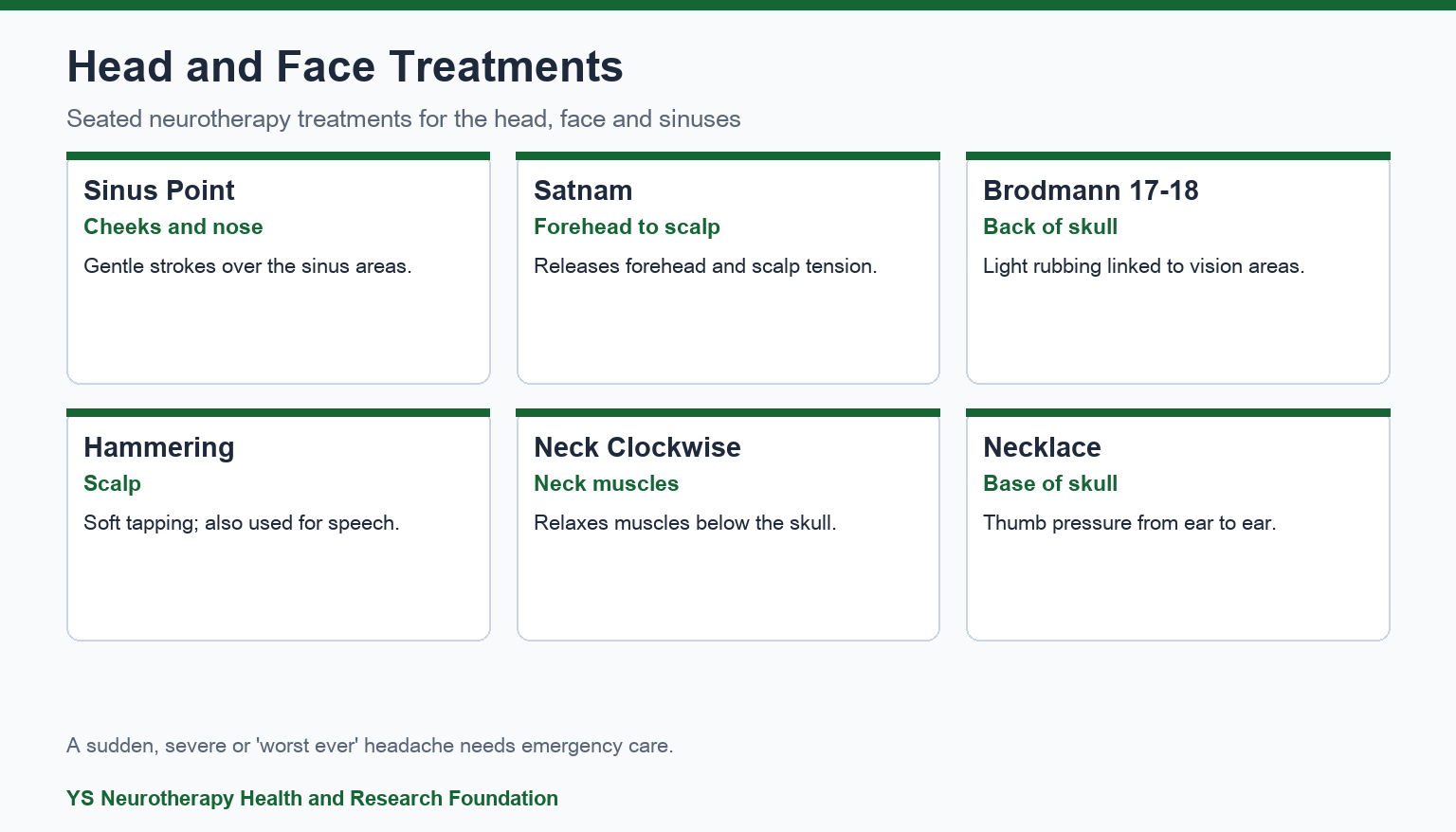
Quick answer: Neurotherapy for headache and sinus problems uses seated treatments on the face, forehead and scalp. Sinus Point strokes the skin over the sinuses, Satnam releases tension from the forehead to the scalp, Brodmann area rubbing works at the back of the skull, and gentle Hammering taps the scalp. They are given by trained therapists alongside medical care.
Headaches and blocked sinuses are among the most common reasons people visit a neurotherapy camp. The system includes a group of gentle, seated treatments for the head and face.
This guide explains how neurotherapy for headache and sinus discomfort works, as taught by YS Neurotherapy Health and Research Foundation, and which warning signs need a doctor instead.
What Are Neurotherapy Head Treatments?
Neurotherapy head treatments are hand techniques given while the patient sits on a chair, using light pressure, stroking and tapping on the face, forehead, scalp and base of the skull. They aim to relax muscles and improve blood flow in the head and sinus areas.
Why They Matter
Many headaches are linked to tight muscles in the forehead, scalp and neck. Sinus pressure adds to the discomfort. Gentle hands-on work can relax these areas without medicines.
Neurotherapy for Headache: The Main Treatments
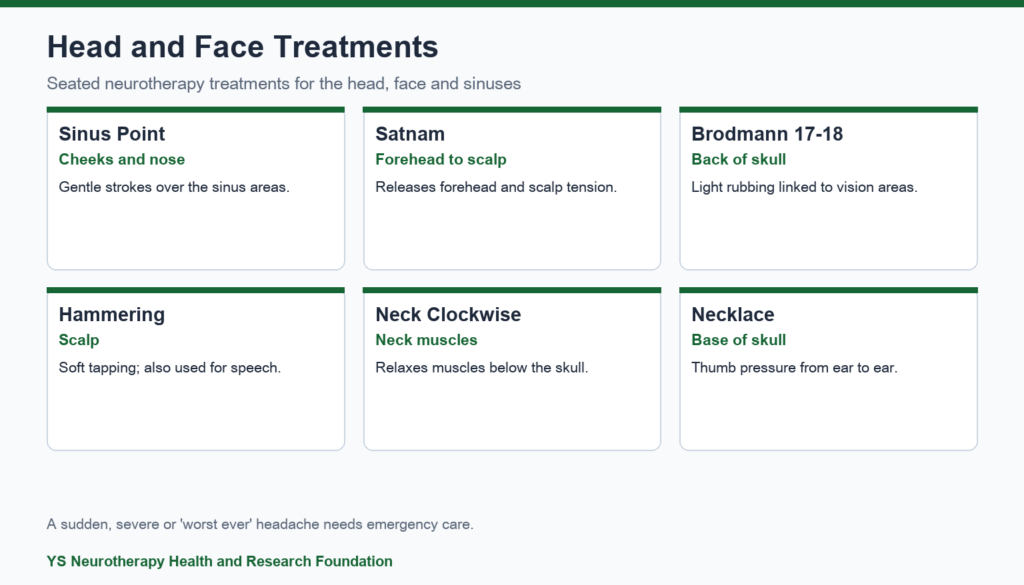
Sinus Point
The therapist stands in front of the patient with palms beside the temples. Using the thumbs, they stroke the skin over the sinus areas in set directions: across the cheeks, up the sides of the nose, and around the eyes. It is used for blocked sinuses and facial heaviness.
Satnam
The therapist stands behind the patient, supports the head against their body, and draws the thumbs from the centre of the forehead back over the scalp in several steps, repeated six times. It is described as especially helpful for headaches.
Brodmann Area 17 and 18
These are areas at the back of the brain linked to vision. The therapist rubs the skin over the lower back of the skull gently with the edge of the thumb, without pulling the hair. It is used for headaches and some eye and speech complaints.
Hammering
With a soft cloth over the head, the therapist taps the scalp lightly with the fingertips or a padded hammer. A version focusing on the left side of the forehead is used for speech difficulty.
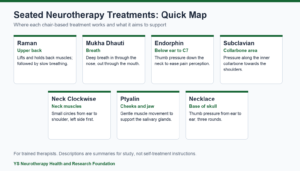
Neck Clockwise and Necklace
These neck treatments relax muscles below the skull and are often combined with head work.
Benefits
- Gentle and suitable for most adults.
- Given seated, so they suit elderly patients.
- Quick to give at camps.
- No medicines involved.
Risks and Warning Signs
Most headaches are harmless, but some are emergencies. Seek urgent medical help for:
- a sudden, severe headache that feels like the worst ever
- headache with fever and a stiff neck
- headache after a head injury
- headache with weakness, confusion, slurred speech or vision loss
The NHS explains when headaches need urgent care, and gives advice on sinusitis.
Treatment Comparison
| Treatment | Area | Main use |
|---|---|---|
| Sinus Point | Cheeks, nose, eyes | Blocked sinuses |
| Satnam | Forehead to scalp | Headache |
| Brodmann 17-18 | Back of skull | Headache, eye strain |
| Hammering | Scalp | Headache, speech support |
Best Practices
- Ask about the type, timing and triggers of the headache.
- Rule out warning signs before treating.
- Use light pressure on the face and scalp.
- Combine with digestion-focused treatment where the teaching suggests it.
- Encourage regular sleep, meals and water.
A Practitioner’s Perspective
Head treatments often bring quick relief, but recurring headaches usually have a cause elsewhere, such as poor digestion, poor sleep or neck strain. Treating the head alone rarely ends the pattern.
Actionable Checklist
- I know the emergency warning signs for headache.
- I use light, even pressure on the face and scalp.
- I ask about sleep, meals and water intake.
- I record the headache pattern on the card.
Key Takeaways
- Head treatments are gentle and given seated.
- Sinus Point targets the sinus areas; Satnam is used for headaches.
- Brodmann rubbing and Hammering work on the back and top of the head.
- Sudden or severe headaches need emergency care.
- Recurring headaches often need whole-body treatment.
Frequently Asked Questions
Can neurotherapy help with migraines?
Neurotherapy treats headaches with head, neck and digestion-focused treatments. Migraines should also be assessed by a doctor.
What is the Satnam treatment?
Satnam is a seated treatment where the therapist draws the thumbs from the forehead back over the scalp in steps to relieve headache.
Is Sinus Point safe for children?
It is gentle, but children should only be treated by trained therapists with very light pressure.
When should I see a doctor for a headache?
Seek urgent care for a sudden severe headache, headache with fever and stiff neck, after a head injury, or with weakness or confusion.
Conclusion
Neurotherapy head treatments offer gentle, drug-free relief for common headaches and sinus pressure, especially when combined with good daily habits.
Learn more about neurotherapy treatment, read how neurotherapy works, or train with our courses.
This article is for learning purposes and does not replace medical advice.