Quick answer: Neurotherapy practitioner rules cover modest, practical clothing, respectful conduct with patients, checks before treatment (identity, meals, blood pressure and sugar history), accurate pain grading, correct pillow placement, careful timing of about six seconds per press, and constant attention to the patient’s comfort.
Neurotherapy relies on the therapist’s hands, feet and judgement. That makes conduct and safety as important as technique.
This guide sets out the neurotherapy practitioner rules taught by YS Neurotherapy Health and Research Foundation, from what to wear to how to position pillows, so students can build safe habits from day one.
What Are Neurotherapy Practitioner Rules?
Neurotherapy practitioner rules are the standards of dress, behaviour, preparation and safety that every therapist follows before, during and after treatment. They protect the patient, the therapist and the reputation of the therapy.
Why These Rules Matter
- Pressure is applied with body weight, so small mistakes can cause pain.
- Patients are often unwell, anxious or in pain.
- Trust is central to the patient’s willingness to continue.
- Clear records let any therapist continue care safely.
Dress and Presentation
Wear clothes that cover the body and allow free movement, neither tight nor loose. Kurta-pyjama, salwar-kameez, or full trousers with a full-sleeved shirt are suitable. Clothing that restricts leg movement makes treatment harder.
Conduct with Patients
- Speak kindly and calmly to patients and their families.
- Never take advantage of a patient’s illness.
- Avoid needless conversation during treatment.
- Male therapists treating women or children should ask a family member to stay present.
- Ask the patient how they feel in the gap between formulas, and report any worsening to the senior therapist.
Before Treatment
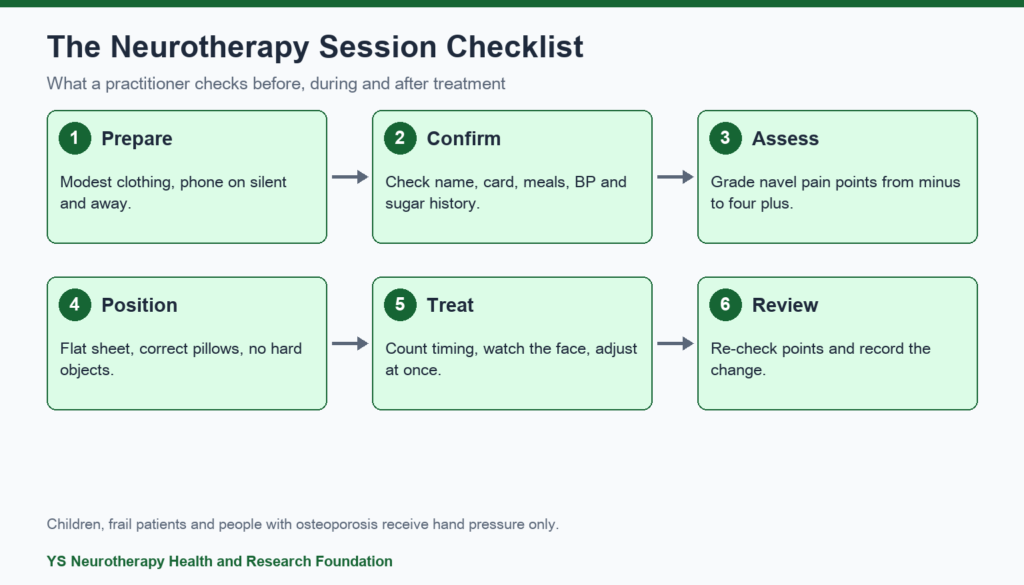
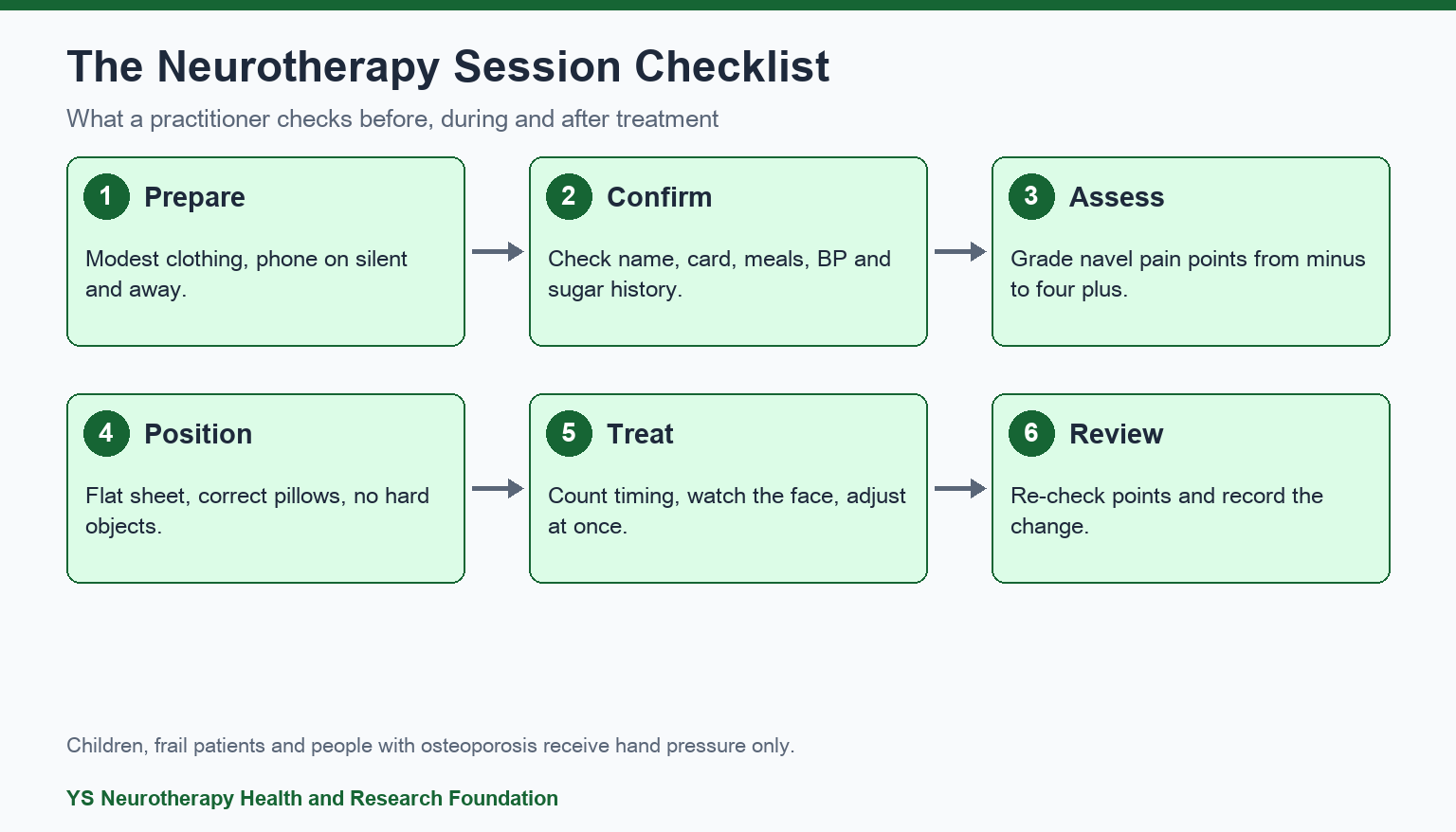
- Put your phone on silent and away; ask the patient to empty their pockets.
- Confirm the patient’s name and address against the card.
- Ask them to use the toilet first.
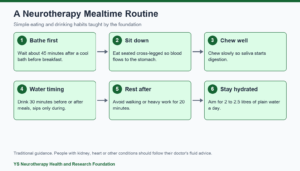
- Ask what and when they last ate.
- Ask about blood pressure and diabetes, and mark this on the card.
- Treatment is usually not given during menstruation unless bleeding is very heavy or very light.
- Make sure the mat and sheet are flat, with nothing hard underneath.
- Give children, frail patients and people with osteoporosis hand pressure only.
Grading and Timing
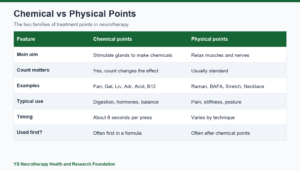
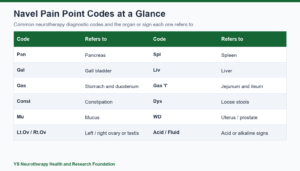
Check all navel pain points and grade each from minus (–) to four plus (++++). Standard pressure lasts about six seconds. Practise with a watch until your timing is exact, because the number of presses changes the effect of some points.
Pillow Placement Rules
| Treatment | Pillow placement |
|---|---|
| Pan, Gal, Spl | One pillow under both thighs, not under the waist |
| Liv⁰ or Mu⁰ | One under the thigh, one under the shoulder |
| Face-down treatments | About 1.5 pillows under the chest |
| Bottom of Feet | 1.5 pillows under the feet and chest |
| Cervical spondylosis with Pan | A thin pillow under the head |
During Treatment
- Watch the patient’s face. If they wince, change the angle or reduce weight at once; never argue about pain.
- Keep your weight balanced so the patient does not feel sudden pressure.
- Stay focused and calm; your confidence affects the patient’s confidence.
Benefits of Following the Rules
- Fewer injuries and complaints.
- More consistent results between therapists.
- Stronger patient trust and regular attendance.
Risks of Ignoring Them
- Bruising or bone injury from hard objects under the patient.
- Back pain from wrong pillow placement.
- Dizziness when patients sit up too fast.
- Loss of trust if patients feel unheard.
The WHO’s patient safety guidance stresses that careful routines and communication prevent most avoidable harm.
A Trainer’s Perspective
The best therapists are not the ones who press hardest. They are the ones who check the card, ask about the last meal, place the pillows properly and watch the patient’s face throughout.
Actionable Checklist
- My phone is silent and away during treatment.
- I confirm identity, meals, BP and sugar history before starting.
- I grade and record all pain points.
- I place pillows correctly for each treatment.
- I adjust pressure at once if the patient feels pain.
Key Takeaways
- Dress modestly and practically for treatment.
- Treat every patient with patience and respect.
- Check history and pain points before starting.
- Get timing and pillow placement right.
- Patient comfort always comes before routine.
Frequently Asked Questions
How long is each pressure held in neurotherapy?
Standard pressure lasts about six seconds. Some treatments use different timings, which are taught in the course.
Why ask about the last meal before treatment?
Abdominal treatment on a full stomach is uncomfortable. The meal time helps decide when to start.
Is neurotherapy given during menstruation?
Usually not, unless bleeding is very heavy or very light, when specific points may be used.
Who should receive hand pressure only?
Young children, frail patients and people with osteoporosis should receive gentle hand pressure rather than foot pressure.
Conclusion
Good technique starts with good habits. Following these rules consistently keeps patients safe and helps the therapy earn the respect it deserves.
Build these skills through our neurotherapy courses, apply via the admission form, or read our guide to becoming a neurotherapist.
This article is for learning purposes and does not replace hands-on training.