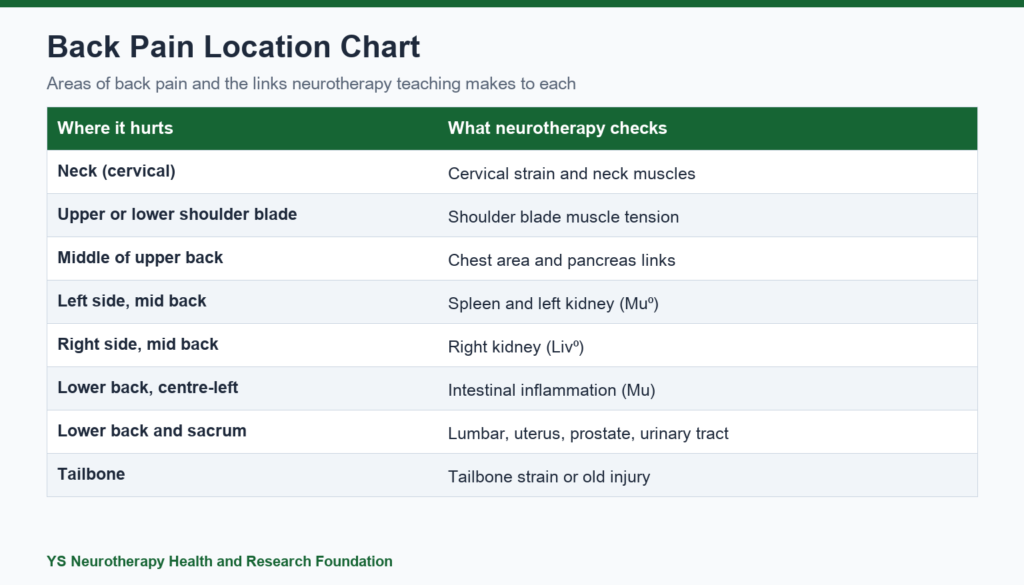
Quick answer: A neurotherapy back pain location chart links pain in different parts of the back to possible sources. Neck pain points to cervical strain, pain on the mid-back left or right to the spleen or kidneys, lower back pain near the centre to intestinal inflammation, and pain around the sacrum to the lumbar spine, uterus, prostate or urinary tract.
Back pain is not always a back problem. In neurotherapy, where the pain sits on the back gives useful clues about what might be behind it.
This guide explains the back pain location chart used in the teaching of YS Neurotherapy Health and Research Foundation, how therapists use it, and which warning signs need medical attention.
What Is the Back Pain Location Chart?
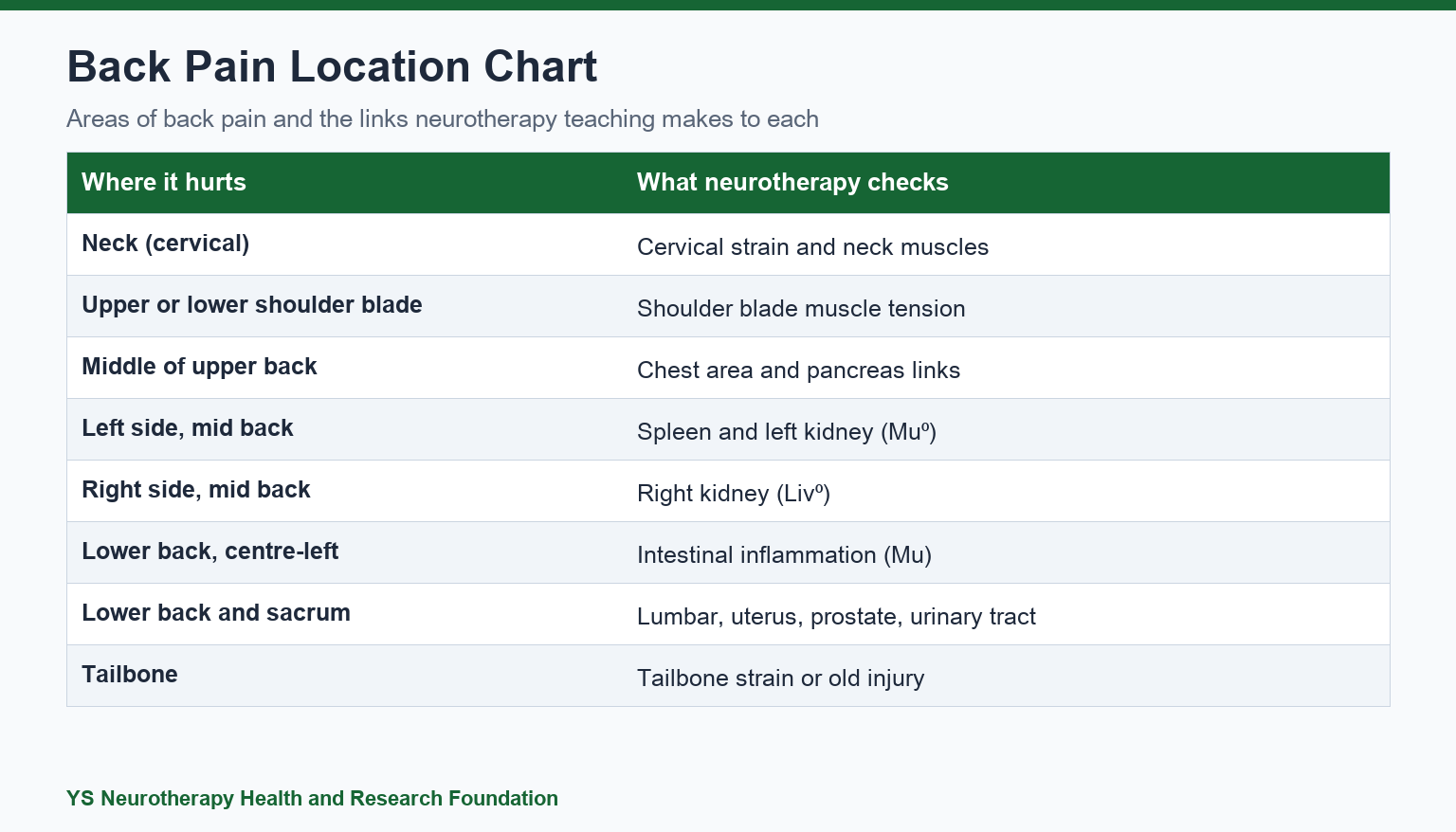
The back pain location chart is a map of the back that links pain in each area to a likely muscular or organ-related cause. Therapists use it alongside navel diagnosis to decide which treatments to give.
Why Location Matters
Internal organs can refer pain to the back. Kidney problems often show as pain on either side of the mid-back. Pancreas problems can show in the middle of the upper back. Knowing this helps avoid treating the back alone when the cause lies elsewhere.
Reading the Chart, Area by Area
Neck
Pain at the back of the neck is usually linked to cervical strain and tight neck muscles.
Upper and Lower Shoulder Blade
Pain above or below the shoulder blades is usually muscular. Neurotherapy has specific treatments for each.
Middle of the Upper Back
The chart links this area to chest pain and to the pancreas.
Left and Right of the Mid Back
On the left, the chart links pain to the spleen and the left kidney (the Mu⁰ point). On the right, it links pain to the right kidney (the Liv⁰ point).
Lower Back, Near the Centre
Pain here is linked to the Mu point and inflammation in the intestines.
Lower Back and Sacrum
Pain around the lower spine and sacrum is linked to the lumbar spine, the left ovary, the uterus or prostate, and the urinary tract. Pain lower on the right side is linked to the appendix and right ovary.
Tailbone
Tailbone pain is often due to an old fall or long sitting.
How Therapists Use the Chart
- Ask exactly where the pain is and when it started.
- Check the navel pain points for matching signs.
- Treat the likely source, such as digestion or the kidneys, as well as the back muscles.
- Re-check the pain after treatment.
Benefits
- Looks beyond the painful spot to possible causes.
- Helps choose between muscle-focused and organ-focused treatment.
- Easy for patients to understand.
Limitations and Red Flags
The chart is a guide, not a diagnosis. See a doctor urgently for back pain with:
- numbness around the genitals or buttocks
- loss of bladder or bowel control
- fever, unexplained weight loss or a history of cancer
- severe pain after a fall or accident
- chest pain or breathlessness
The NHS lists these and other back pain warning signs.
Muscular vs Organ-Related Back Pain
| Feature | Muscular pain | Possibly organ-related pain |
|---|---|---|
| Triggered by | Movement, posture | Meals, urination, periods |
| Changes with rest | Often eases | Often stays the same |
| Other symptoms | Stiffness | Fever, urine or digestive changes |
| Neurotherapy focus | Physical treatments | Chemical points plus medical check |
Best Practices
- Record the exact pain location on the card.
- Match it with navel findings before treating.
- Refer red-flag cases to a doctor immediately.
- Advise on posture, sitting time and lifting.
A Practitioner’s Perspective
Pain on the right side of the mid-back that does not change with movement often turns out to be linked to the kidney area rather than the muscles. The chart helps therapists ask the right questions before pressing anything.
Actionable Checklist
- I can point to exactly where my back hurts.
- I have noted whether the pain changes with movement or meals.
- I know the red-flag signs that need urgent care.
- My therapist checks navel points as well as the back.
Key Takeaways
- The location of back pain offers clues to its source.
- Mid-back pain on either side is linked to the kidneys in the chart.
- Lower back pain may relate to intestines or pelvic organs.
- The chart guides treatment but does not replace diagnosis.
- Red-flag symptoms need a doctor straight away.
Frequently Asked Questions
Can kidney problems cause back pain?
Yes. Kidney pain is often felt on either side of the mid-back. Pain with fever or urine changes needs a doctor.
What does pain in the middle of the upper back mean?
The neurotherapy chart links it to chest pain and the pancreas. A doctor should check any chest-related pain.
Can neurotherapy help lower back pain?
Many patients find relief, especially when treatment addresses digestion and pelvic health as well as the muscles.
When is back pain an emergency?
Seek urgent care for numbness around the buttocks, loss of bladder or bowel control, fever, or pain after a serious fall.
Conclusion
Where your back hurts matters. The neurotherapy back pain chart helps therapists look past the sore spot to its possible source, while red flags always go to a doctor.
Try our back pain crash course, read about neurotherapy treatment, or study our diagnosis points guide.
This article is for general information and does not replace medical advice.